Inhaltsverzeichnis
- Einführung
- What Is a Protected Lithium Battery?
- How the Protection Circuit Works
- Voltage Thresholds
- What It Actually Prevents
- What Is an Unprotected (Bare) Zelle?
- Geschützt vs. ungeschützt: Side-by-Side Comparison
- Which Should You Choose?
- Choose a Protected Cell When
- Choose a Bare Cell When
- Temperature Protection for Demanding Environments
- Common Mistakes to Avoid
- Sourcing Protected and Unprotected Cells from One Manufacturer
- FAQ
- Are protected batteries physically larger than unprotected ones?
- Can I use an unprotected 18650 in a flashlight?
- Does the protection circuit reduce capacity?
- How fast does the protection board respond to a short circuit?
- Do protected batteries need a special charger?
- Which Keeppower protected 18650 should I start with?
Einführung

When sourcing lithium-ion cells for a product or device, buyers quickly meet two versions of what looks like the same cell: protected and unprotected. A typical comparison at Keeppower is the Keeppower P1835J 3500mAh protected 18650 against a Panasonic NCR18650GA 3500mAh 10A cell of similar capacity. The difference is not energy – both are around 3500mAh. The difference is safety electronics. This guide explains how the protection circuit works, what each option is best at, and how to decide between protected vs unprotected lithium batteries for your design.
What Is a Protected Lithium Battery?
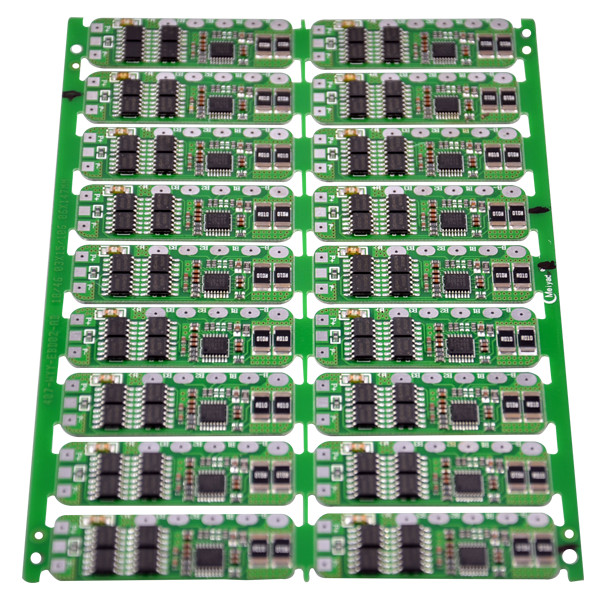
A protected lithium battery is a standard cylindrical cell with an added protection circuit module (PCM) welded onto it, usually as a small PCB at the negative or positive end. The PCM uses a dedicated protection IC – on Keeppower protected cells the IC is Japanese-made – and continuously monitors voltage, current and short-circuit conditions. If a limit is crossed, the circuit disconnects the cell to prevent damage.
On the representative Keeppower P1835J protected 18650, the built-in safety circuit provides overcharge, Überentladung, overcurrent and short-circuit protection. The cell delivers a typical 3500mAh (minimum 3350mAh) at a nominal 3.6/3.7V, charges to a maximum of 4.2V and cuts off at 2.5V, mit über 500 charge-discharge cycles per Keeppower product pages. Because the PCB adds length, a protected cell measures about 18.6 X 69.1 mm – slightly longer than the bare cell it is built from. The full range is browsable in the classic protected battery categories and explained in the Keeppower protected lithium-ion batteries guide.
Mechanically, a protected cell carries a small rigid protection PCB welded to one end, which is why the cell runs marginally longer than its bare equivalent. Buyers can also specify the terminal top style – flat top or button top – depending on whether the device needs the positive contact nub, alongside maximum discharge current, private labeling and packaging, per Keeppower product pages. These options matter when a protected cell must drop into an existing flashlight or instrument compartment with tight clearance.
How the Protection Circuit Works
Voltage Thresholds
Lithium-ion cells are happiest inside a narrow voltage window. Charging beyond the upper limit stresses the cathode and risks swelling; discharging below the lower limit permanently damages capacity. A protected cell therefore disconnects on overcharge and on overdischarge. At the single-cell level, Keeppower protected 18650s use a 4.2V maximum charge and a 2.5V discharge cut-off (per Keeppower product pages).
Pack-level PCMs do the same job per cell with tighter margins. Keeppower’s 4S-1548 protection board, Zum Beispiel, sets overcharge protection at 4.27 +/- 0.025V per cell, overdischarge protection at 2.3 +/- 0.05V per cell, discharge overcurrent protection at 10 +/- 5A with a 20 +/- 3 millisecond delay, and short-circuit detection at 300 +/- 200 microseconds – per Keeppower product pages. The complete PCM lineup sits in the PCM protection board category.
What It Actually Prevents
In everyday terms the PCM guards four failure modes. Overcharge protection stops the cell being pushed above its safe top voltage. Overdischarge protection stops it being drained below the point of no return. Overcurrent protection interrupts heavy loads the cell was not designed for. Short-circuit protection reacts almost instantly when the terminals are accidentally bridged. For end-user devices such as flashlights, this is the reason protected cells exist – see how protected flashlight batteries prevent overcharging and short-circuiting.
What Is an Unprotected (Bare) Zelle?
An unprotected or bare cell has no onboard PCB. It is the lithium-ion cell as delivered by the cell maker, optimized for performance rather than end-user safety. The Panasonic NCR18650GA listed by Keeppower is a typical example: nominal 3.6/3.7V and 3500mAh (minimum 3350mAh), a maximum continuous discharge of 10A, weight under 49.5g, CC-CV charging at 4.20 +/- 0.03V, charging between +10 Und +45 degrees Celsius, discharging between -20 Und +60 degrees Celsius, and storage between -20 Und +50 degrees Celsius – all per Keeppower product pages. Higher-capacity bare cells such as the Keeppower 18650-4000LD 4000mAh cell follow the same philosophy.
The trade-off is explicit: a bare cell offers more discharge capability and a slimmer body, but it relies entirely on the charger, the device firmware, or a pack-level BMS/PCM for protection. Use it without any of those, and the cell – and your product – is exposed.
Geschützt vs. ungeschützt: Side-by-Side Comparison
| Parameter | Protected Battery | Ungeschützt (Bare) Zelle |
|---|---|---|
| Onboard PCM | Ja, built-in safety circuit with Japanese IC | None; protection must come from the device or a pack BMS |
| Overcharge limit | Disconnects around 4.2V per cell | Device or charger must enforce the limit |
| Overdischarge cut-off | Disconnects around 2.5V per cell | Device must enforce the lower limit |
| Überstrom / short protection | Ja, with millisecond / microsecond response | No onboard protection |
| Physical length | Slightly longer (e.g. P1835J: 69.1 mm) | Shorter, fits tighter mechanical spaces |
| Zyklusleben (per Keeppower) | Über 500 Lade-Entlade-Zyklen | Depends entirely on how the system charges and discharges it |
| Typical capacity | 3500mAh (min 3350mAh) on P1835J | 3500mAh (min 3350mAh) on NCR18650GA class |
| Am besten für | Taschenlampen, cordless devices, retail batteries | Custom battery packs with PCM/BMS, OEM products, DIY builds |
Which Should You Choose?
Choose a Protected Cell When
Choose a protected battery when the end product is a single-cell or simple device used by non-technical people – Taschenlampen, Scheinwerfer, wireless sensors, or retail replacement cells. The PCM makes the cell safe to handle, safe in an aftermarket charger, and forgiving of user mistakes. It also removes the need to design and certify your own protection logic at single-cell level.
Choose a Bare Cell When
Choose an unprotected cell when you are building a multi-cell pack with a proper PCM or BMS, need the maximum continuous discharge (the NCR18650GA class reaches 10A), or have a tight mechanical envelope where the extra millimetre of a protected PCB matters. In this scenario, the pack-level board does the monitoring job and duplicating it on every cell would waste space and money. KeePopower custom battery pack programs are built around exactly this division of labour.
Temperature Protection for Demanding Environments
Between the two extremes lies a useful middle ground: temperature-protected cells. KeePopower temperature protection battery series adds thermal protection on top of the standard PCM, and the regulatory angle is covered in temperature-protected lithium batteries and EU safety. This matters for products that charge in poorly ventilated enclosures or sit near heat sources.
Common Mistakes to Avoid
Three mistakes recur. Erste, putting a bare cell into a consumer device that expects protection – the device may overcharge the cell. Zweite, putting protected cells into a custom pack that already has a BMS – you add length, cost and a second protection layer for no benefit. Dritte, ignoring the cut-off voltage: running a cell repeatedly below 2.5V (or allowing a bare cell below its safe lower limit) is the fastest way to shorten cycle life. Decide the protection architecture once, at the system level, and spec cells to match.
Sourcing Protected and Unprotected Cells from One Manufacturer
A practical advantage of an integrated supplier is that protected cells, bare cells, protection boards and chargers all come from the same catalog. Keeppower stocks protected cylindrical cells across the 10440 Zu 26650 range, high-discharge bare cells graded by C-rate, PCM protection boards for 1S to 4S packs, and chargers such as the L4 intelligent charger that handles 18650, 21700 Und 26650 cells side by side. That consistency simplifies qualification: the protection logic, test reports and documentation behind a protected retail cell and a pack assembled from bare cells originate from the same engineering team. Related background is available in the OEM-oriented protected vs unprotected lithium batteries discussion and the dedicated protected vs unprotected 18650 battery comparison.
FAQ
Are protected batteries physically larger than unprotected ones?
Ja. The protection PCB adds a few millimetres of length. The Keeppower P1835J protected 18650 measures about 69.1 mm in length versus roughly 65 mm for the equivalent bare cell, so always check mechanical clearance before swapping between protected and unprotected versions.
Can I use an unprotected 18650 in a flashlight?
Normalerweise nein. Most consumer flashlights rely on the cell’s own protection circuit, because the light’s driver does not implement full cell protection. Use a protected cell unless the device manual explicitly states it requires a high-discharge bare cell and has its own protection.
Does the protection circuit reduce capacity?
Minimally. The P1835J protected cell still delivers a typical 3500mAh (minimum 3350mAh), essentially the same as the bare cell it is built from, because the PCB consumes negligible energy. The main penalties are length, a small weight increase and cost.
How fast does the protection board respond to a short circuit?
Per Keeppower PCM product pages, the 4S-1548 protection board detects a short circuit within about 300 microseconds and disconnects. Overcurrent protection triggers within about 20 milliseconds depending on the current level. These reaction times are what prevent terminal bridging from becoming a thermal event.
Do protected batteries need a special charger?
NEIN. Protected cells charge through standard CC-CV lithium-ion chargers; the PCM only intervenes when limits are crossed. It remains good practice to use a quality intelligent charger matched to the cell chemistry.
Which Keeppower protected 18650 should I start with?
Der Keeppower P1835J 3500mAh protected 18650 is the reference protected model: 3500mAh typical, built-in overcharge/overdischarge/overcurrent/short-circuit protection, and over 500 Zyklen. For very high-discharge protected needs, the 15A-rated P1830RC is the next step up in the same family.