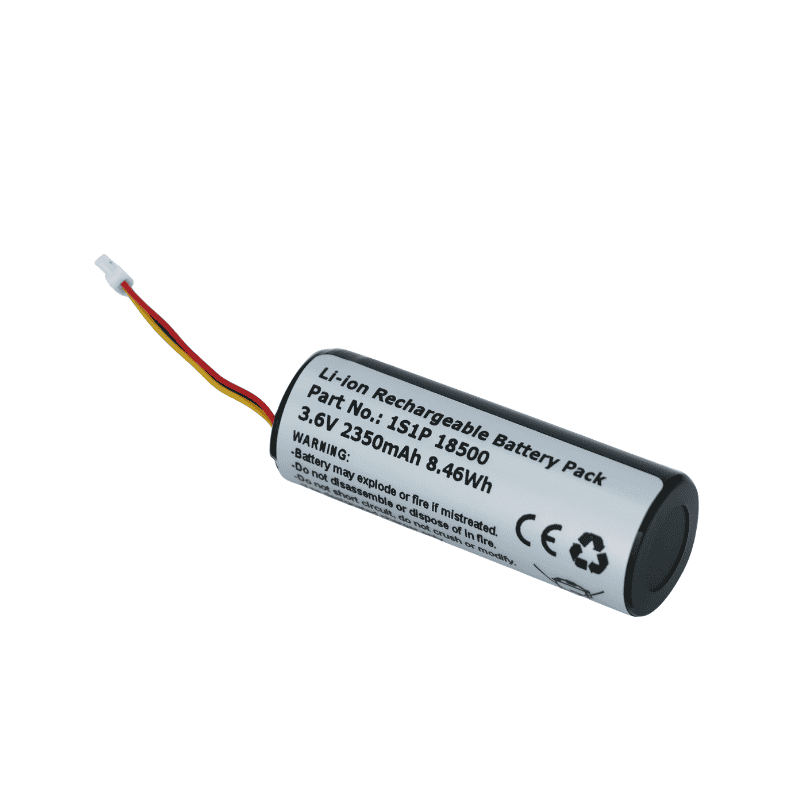
In lithium battery pack notation, S describes the number of cell groups connected in series, while P describes how many cells are connected in parallel within each series group. A 1S1P pack contains one cell. A 2S1P pack uses two cells in series. A 4S2P pack has four series groups, with two cells in parallel in each group, for a total of eight cells.
Series increases voltage. Parallel increases capacity and can share current when designed correctly. Energy rises whenever total cell count rises, but the voltage and current path change differently. Understanding this distinction is essential for choosing chargers, BMS hardware, Anschlüsse, and device electronics.

What S and P mean
For identical cells, series voltage adds while ampere-hour capacity remains that of one parallel group. Four nominal 3.6 V cells in series create a nominal 14.4 V pack. In parallel, voltage stays the same while ampere-hours add: two 3 Ah cells in parallel form a nominal 3.6 V, 6 Ah group.
The pack’s maximum charge voltage also adds in series. A conventional 4.2 V maximum cell becomes 8.4 V in 2S, 12.6 V in 3S, Und 16.8 V in 4S. This is why a charger and BMS must match the exact series count. Connecting a 4S pack to a 3S charger or protection board is unsafe and incorrect.
Spezifikationen, die im realen Gerät von Bedeutung sind
Define nominal voltage, maximale Ladespannung, minimum operating voltage, Kapazität, Energie, continuous current, Spitzenstrom, cell count, and mechanical arrangement. Parallel current sharing depends on matched cells and low, balanced interconnect resistance. Series strings require monitoring because the weakest group can reach voltage limits first.
A BMS or PCM may provide overcharge, Übersteuerung, Überstrom, Kurzschluss, Temperatur, and balancing functions depending on design. The number of sense connections and the wiring order are specific to the series count. Fuses, Isolierung, Abstand, and connector ratings remain necessary parts of the safety architecture.
| Configuration | Nominal effect | Example with 3 Ah cells |
|---|---|---|
| 1S1P | Base voltage and capacity | 3.6 V, 3 Ah |
| 2S1P | Twice voltage | 7.2 V, 3 Ah |
| 1S2P | Twice capacity | 3.6 V, 6 Ah |
| 4S2P | Four times voltage, twice capacity | 14.4 V, 6 Ah |

So treffen Sie die richtige Wahl
Choose series count from the device voltage and power-conversion design. A higher pack voltage can reduce current for the same power, but it changes insulation, component ratings, charger requirements, and regulatory considerations. Choose parallel count from energy, Laufzeit, aktuell, Raum, and thermal needs.
Do not add cells casually to an existing design. Increasing series count can damage the load; increasing parallel count changes fault energy, charge time, pack geometry, and current-sharing behavior. Any configuration change requires electrical and mechanical review.
Häufige Fehler, die es zu vermeiden gilt
A frequent error is adding ampere-hours in series. Another is assuming that parallel cells automatically share equally despite differences in resistance, Temperatur, or state of charge. Never connect unmatched cells or packs in parallel without a controlled design.
Incorrect BMS wiring can damage electronics or leave cells unprotected. Follow the exact connection sequence and diagram for the pack design. End users should not assemble or repair lithium-ion packs unless trained and authorized for the specific system.
Anwendungs- und OEM-Überlegungen
A 1S pack suits low-voltage electronics and power-bank style conversion. Two- and three-series packs appear in instruments, Beleuchtung, and compact equipment. Four-series packs can serve 14.4/14.8 V nominal systems such as portable devices and robotics. The application still determines chemistry, cell format, and current capability.
OEM designers should model fault current, heat generation, cell spacing, enclosure venting, connector touch safety, service procedure, transport condition, and charging. Production requires cell matching, traceability, weld control, insulation inspection, and end-of-line testing.

Ausgearbeitetes Beispiel
A device needs 60 W from a 4S nominal 14.4 V pack. Ignoring losses, current is about 4.2 A. If runtime requires 86 Wh, a 4S2P design using 3 Ah cells provides roughly 86.4 Wh nominal. The engineering team must still confirm that each cell group, BMS, weld, wire, and connector supports continuous and peak current with adequate margin.
Sicherheit, Überprüfung, und Einkaufsdisziplin
Die Batterieauswahl sollte niemals allein auf der Grundlage der größten Kapazität erfolgen. Bestätigen Sie die vom Gerätehersteller zugelassene Chemie, Nennspannung, maximale Ladespannung, Polarität, Terminalstil, physische Hülle, und Dauer- und Spitzenstromanforderungen. Eine Zelle, die mechanisch passt, kann trotzdem elektrisch falsch sein. For series and parallel battery packs, Der sicherste Ansatz besteht darin, das Gerätehandbuch und das Batteriedatenblatt als übereinstimmendes Paar zu behandeln, anstatt davon auszugehen, dass zwei Zellen mit ähnlichen Namen austauschbar sind.
Kaufen Sie bei einem nachverfolgbaren Lieferanten und prüfen Sie das aktuelle Datenblatt, Schutzdetails, Testdokumentation, und Transportinformationen für das genaue Modell. Halten Sie die Zellen von losen Metallgegenständen fern, Wasser, zerquetschen, Punktion, übermäßige Hitze, und unbefugte Änderung. Verwenden Sie keinen Akku mehr, der ungewöhnlich heiß wird, geschwollen, verbeult, korrodiert, undicht, oder mechanisch beschädigt. Verwenden Sie ein kompatibles Ladegerät und überschreiten Sie niemals den angegebenen Ladestrom oder die angegebene Spannung. Diese Vorgehensweisen unterstützen einen zuverlässigen Betrieb, ersetzen jedoch nicht die mit dem Gerät gelieferten Anweisungen, Ladegerät, oder Batterie.
Ein praktischer Auswahl-Workflow
- Beginnen Sie mit der Ladung. Nennspannung notieren, Betriebsstrom, Spitzenstrom, Laufzeitziel, und Arbeitszyklus.
- Überprüfen Sie das Fach. Nutzbaren Durchmesser messen, Länge, Abstand zwischen den Anschlüssen, Terminaltyp, und Federkompression.
- Wählen Sie die Sicherheitsarchitektur. Entscheiden Sie, ob die Anwendung eine geschützte Zelle erwartet, eine ungeschützte Zelle, die vom Host verwaltet wird, oder ein komplettes Paket mit einem BMS oder PCM.
- Match-Aufladung. Überprüfen Sie die Chemie, maximale Ladespannung, Ladestrom, Beendigungsmethode, und Temperaturgrenzen.
- Validieren Sie das reale System. Testen Sie repräsentative Batterien im endgültigen Gerät im erwarteten Temperatur- und Lastbereich, bevor Sie die Produktion genehmigen.
Dieser Workflow ist besonders wichtig für OEM-Programme. Das Batterieverhalten hängt von der Wechselwirkung zwischen der Zellchemie ab, Schutzelektronik, mechanische Verpackung, Firmware, Aufladen, und die Benutzerumgebung. Eine frühzeitige Validierung ist kostengünstiger als die Neugestaltung eines Batteriefachs oder einer Leistungsstufe nach Abschluss der Werkzeugbereitstellung.
Häufig gestellte Fragen
Does series increase capacity in Ah?
NEIN. Series increases voltage; Ah remains the capacity of one parallel group.
Does parallel increase voltage?
NEIN. Parallel increases Ah and potential current sharing while voltage remains that of one group.
What does 4S2P mean?
Four groups are connected in series and each group contains two parallel cells, for eight cells total.
Can I use the same charger for 3S and 4S packs?
NEIN. The charger and protection system must match the exact chemistry and series count.
Verwandte Keeppower-Ressourcen
- Customized Battery Packs
- Accessories and protection PCBs
- Geschützt 18650 Batterien
- Geschützt 21700 Batterien
- Selected cells
- Ladegeräte und Powerbanks
- Robot battery solutions
- Kontaktieren Sie Keeppower
Abschluss
Series and parallel connections change different properties: series raises voltage, while parallel raises ampere-hour capacity and shares current. Select S count from the device voltage and P count from energy and current requirements, then design the charger, BMS, interconnects, Gehäuse, and validation around the exact configuration.
Benötigen Sie Hilfe beim Anpassen einer Batterie an ein Gerät oder bei der Entwicklung einer OEM-Lösung?? Kontaktieren Sie Keeppower mit der Spannung, aktuell, Laufzeit, Abmessungen, Stecker, Lademethode, und Umweltanforderungen Ihres Projekts.