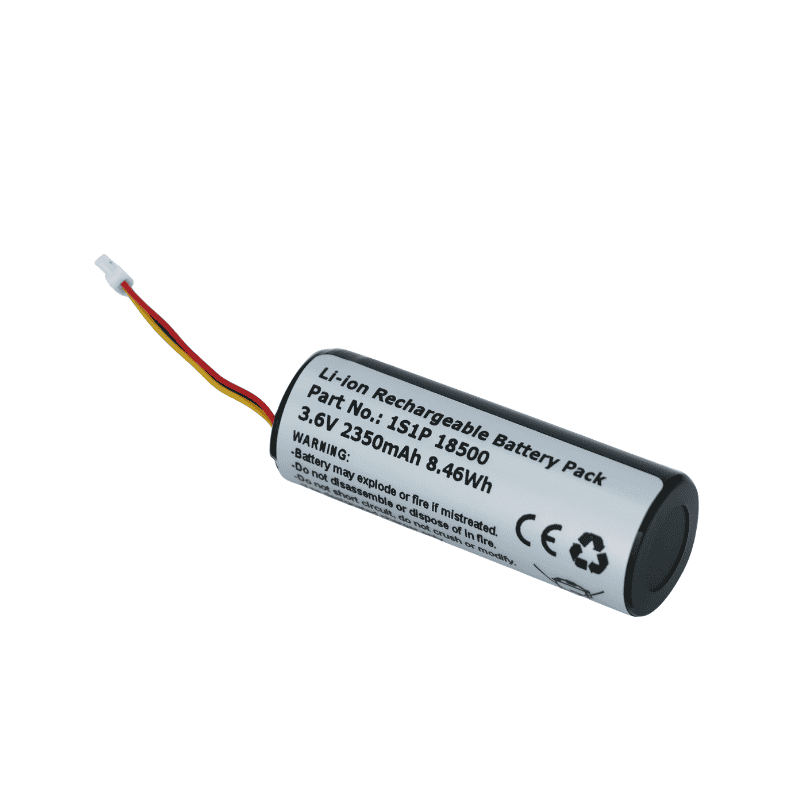
In lithium battery pack notation, S describes the number of cell groups connected in series, while P describes how many cells are connected in parallel within each series group. A 1S1P pack contains one cell. A 2S1P pack uses two cells in series. A 4S2P pack has four series groups, with two cells in parallel in each group, for a total of eight cells.
Series increases voltage. Parallel increases capacity and can share current when designed correctly. Energy rises whenever total cell count rises, but the voltage and current path change differently. Understanding this distinction is essential for choosing chargers, BMS hardware, コネクタ, and device electronics.

What S and P mean
For identical cells, series voltage adds while ampere-hour capacity remains that of one parallel group. Four nominal 3.6 V cells in series create a nominal 14.4 V pack. In parallel, voltage stays the same while ampere-hours add: two 3 Ah cells in parallel form a nominal 3.6 V, 6 Ah group.
The pack’s maximum charge voltage also adds in series. A conventional 4.2 V maximum cell becomes 8.4 V in 2S, 12.6 V in 3S, そして 16.8 V in 4S. This is why a charger and BMS must match the exact series count. Connecting a 4S pack to a 3S charger or protection board is unsafe and incorrect.
実機で重要なスペック
Define nominal voltage, 最大充電電圧, minimum operating voltage, 容量, エネルギー, continuous current, ピーク電流, cell count, and mechanical arrangement. Parallel current sharing depends on matched cells and low, balanced interconnect resistance. Series strings require monitoring because the weakest group can reach voltage limits first.
A BMS or PCM may provide overcharge, 過剰充電, 過電流, 短絡, 温度, and balancing functions depending on design. The number of sense connections and the wiring order are specific to the series count. Fuses, 絶縁, spacing, and connector ratings remain necessary parts of the safety architecture.
| Configuration | Nominal effect | Example with 3 Ah cells |
|---|---|---|
| 1S1P | Base voltage and capacity | 3.6 V, 3 ああ |
| 2S1P | Twice voltage | 7.2 V, 3 ああ |
| 1S2P | Twice capacity | 3.6 V, 6 ああ |
| 4S2P | Four times voltage, twice capacity | 14.4 V, 6 ああ |

正しい選択をする方法
Choose series count from the device voltage and power-conversion design. A higher pack voltage can reduce current for the same power, but it changes insulation, component ratings, charger requirements, and regulatory considerations. Choose parallel count from energy, ランタイム, 現在, 空間, and thermal needs.
Do not add cells casually to an existing design. Increasing series count can damage the load; increasing parallel count changes fault energy, charge time, pack geometry, and current-sharing behavior. Any configuration change requires electrical and mechanical review.
避けるべきよくある間違い
A frequent error is adding ampere-hours in series. Another is assuming that parallel cells automatically share equally despite differences in resistance, 温度, or state of charge. Never connect unmatched cells or packs in parallel without a controlled design.
Incorrect BMS wiring can damage electronics or leave cells unprotected. Follow the exact connection sequence and diagram for the pack design. End users should not assemble or repair lithium-ion packs unless trained and authorized for the specific system.
アプリケーションと OEM に関する考慮事項
A 1S pack suits low-voltage electronics and power-bank style conversion. Two- and three-series packs appear in instruments, 点灯, and compact equipment. Four-series packs can serve 14.4/14.8 V nominal systems such as portable devices and robotics. The application still determines chemistry, cell format, and current capability.
OEM designers should model fault current, heat generation, cell spacing, enclosure venting, connector touch safety, service procedure, transport condition, and charging. Production requires cell matching, トレーサビリティ, weld control, insulation inspection, and end-of-line testing.

作業例
A device needs 60 W from a 4S nominal 14.4 V pack. Ignoring losses, current is about 4.2 あ. If runtime requires 86 WH, a 4S2P design using 3 Ah cells provides roughly 86.4 Wh nominal. The engineering team must still confirm that each cell group, BMS, weld, wire, and connector supports continuous and peak current with adequate margin.
安全性, 検証, 購買規律と
バッテリーの選択は、最大容量の数字だけを基準にしてはいけません。. デバイスメーカーが許可する化学物質を確認する, 公称電圧, 最大充電電圧, 極性, 端子のスタイル, 物理的なエンベロープ, 連続およびピーク電流の要件. 機械的に適合するセルでも、電気的に間違っている可能性があります. For series and parallel battery packs, 最も安全なアプローチは、類似した名前を持つ 2 つのセルが交換可能であると想定するのではなく、機器のマニュアルとバッテリーのデータシートを一致するペアとして扱うことです。.
追跡可能なサプライヤーから購入し、現在の仕様書を確認してください, 保護の詳細, テストドキュメント, 正確なモデルの輸送情報. 細胞を金属製の物体から遠ざける, 水, 粉砕する, 穿刺, 過度の熱, および不正な改変. バッテリーが異常に熱くなった場合は使用を中止してください, 腫れた, 凹んだ, 腐食した, 漏れている, または機械的に損傷している. 互換性のある充電器を使用し、指定された充電電流または電圧を決して超えないようにしてください。. これらの実践は信頼性の高い操作をサポートしますが、デバイスに付属の説明書に代わるものではありません。, 充電器, またはバッテリー.
実用的な選択ワークフロー
- 負荷から始める. 公称電圧を記録する, 動作電流, ピーク電流, ランタイムターゲット, とデューティサイクル.
- コンパートメントを確認してください. 使用可能な直径を測定する, 長さ, コネクタのクリアランス, 端子の種類, そしてスプリングの圧縮.
- 安全アーキテクチャを選択する. アプリケーションが保護されたセルを予期しているかどうかを決定する, ホストによって管理される保護されていないセル, または、BMS または PCM を含む完全なパック.
- マッチ充電. 化学反応を検証する, 最大充電電圧, 充電電流, 終了方法, と温度制限.
- 実際のシステムを検証する. 生産を承認する前に、予想される温度と負荷の範囲全体で最終デバイスの代表的なバッテリーをテストします。.
このワークフローは、OEM プログラムにとって特に重要です. バッテリーの動作はセルの化学反応間の相互作用に依存します, 保護電子機器, 機械的梱包, ファームウェア, 充電, そしてユーザー環境も. 早期の検証は、ツールの完成後にバッテリーコンパートメントやパワーステージを再設計するよりも低コストです。.
よくある質問
Does series increase capacity in Ah?
いいえ. Series increases voltage; Ah remains the capacity of one parallel group.
Does parallel increase voltage?
いいえ. Parallel increases Ah and potential current sharing while voltage remains that of one group.
What does 4S2P mean?
Four groups are connected in series and each group contains two parallel cells, for eight cells total.
Can I use the same charger for 3S and 4S packs?
いいえ. The charger and protection system must match the exact chemistry and series count.
関連する Keeppower リソース
- カスタマイズされたバッテリーパック
- Accessories and protection PCBs
- 保護されています 18650 電池
- 保護されています 21700 電池
- 選択されたセル
- 充電器とモバイルバッテリー
- Robot battery solutions
- キープパワーへのお問い合わせ
結論
Series and parallel connections change different properties: series raises voltage, while parallel raises ampere-hour capacity and shares current. Select S count from the device voltage and P count from energy and current requirements, then design the charger, BMS, interconnects, 囲い, and validation around the exact configuration.
バッテリーをデバイスに適合させるか、OEM ソリューションを開発するのにサポートが必要です? キープパワーへのお問い合わせ 電圧で, 現在, ランタイム, 寸法, コネクタ, 充電方法, プロジェクトの環境要件.