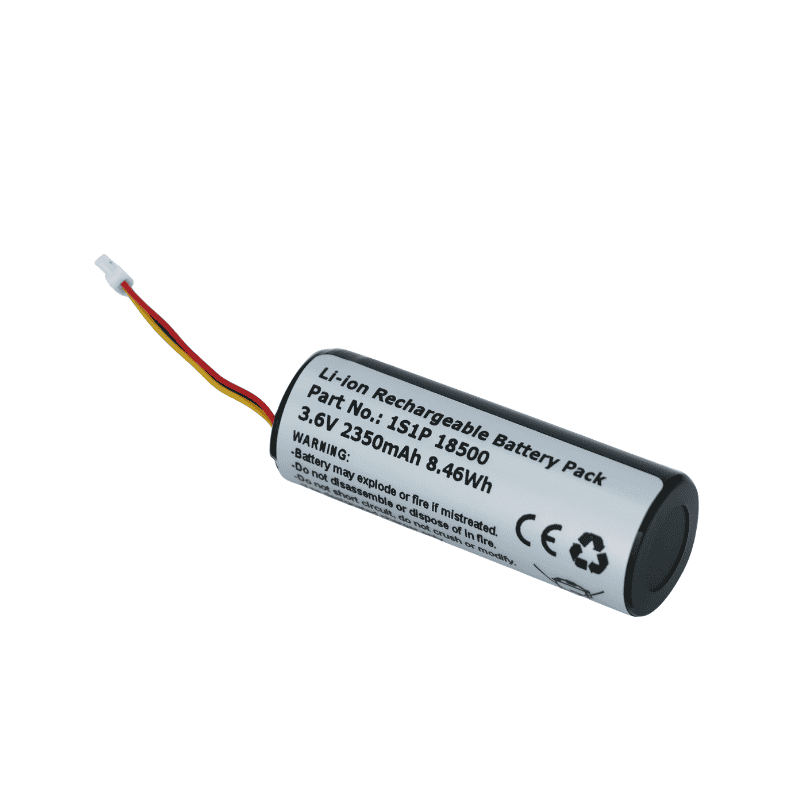
In lithium battery pack notation, S describes the number of cell groups connected in series, while P describes how many cells are connected in parallel within each series group. A 1S1P pack contains one cell. A 2S1P pack uses two cells in series. A 4S2P pack has four series groups, with two cells in parallel in each group, for a total of eight cells.
Series increases voltage. Parallel increases capacity and can share current when designed correctly. Energy rises whenever total cell count rises, but the voltage and current path change differently. Understanding this distinction is essential for choosing chargers, BMS hardware, connectoren, and device electronics.

What S and P mean
For identical cells, series voltage adds while ampere-hour capacity remains that of one parallel group. Four nominal 3.6 V cells in series create a nominal 14.4 V pack. In parallel, voltage stays the same while ampere-hours add: two 3 Ah cells in parallel form a nominal 3.6 V, 6 Ah group.
The pack’s maximum charge voltage also adds in series. A conventional 4.2 V maximum cell becomes 8.4 V in 2S, 12.6 V in 3S, En 16.8 V in 4S. This is why a charger and BMS must match the exact series count. Connecting a 4S pack to a 3S charger or protection board is unsafe and incorrect.
Specificaties die er toe doen in het echte apparaat
Define nominal voltage, maximale laadspanning, minimum operating voltage, capaciteit, energy, continuous current, piekstroom, cell count, and mechanical arrangement. Parallel current sharing depends on matched cells and low, balanced interconnect resistance. Series strings require monitoring because the weakest group can reach voltage limits first.
A BMS or PCM may provide overcharge, overdaad, overstroom, kortsluiting, temperatuur, and balancing functions depending on design. The number of sense connections and the wiring order are specific to the series count. Fuses, isolatie, spacing, and connector ratings remain necessary parts of the safety architecture.
| Configuration | Nominal effect | Example with 3 Ah cells |
|---|---|---|
| 1S1P | Base voltage and capacity | 3.6 V, 3 Ah |
| 2S1P | Twice voltage | 7.2 V, 3 Ah |
| 1S2P | Twice capacity | 3.6 V, 6 Ah |
| 4S2P | Four times voltage, twice capacity | 14.4 V, 6 Ah |

Hoe u de juiste keuze maakt
Choose series count from the device voltage and power-conversion design. A higher pack voltage can reduce current for the same power, but it changes insulation, component ratings, charger requirements, and regulatory considerations. Choose parallel count from energy, looptijd, huidig, ruimte, and thermal needs.
Do not add cells casually to an existing design. Increasing series count can damage the load; increasing parallel count changes fault energy, charge time, pack geometry, and current-sharing behavior. Any configuration change requires electrical and mechanical review.
Veelgemaakte fouten om te vermijden
A frequent error is adding ampere-hours in series. Another is assuming that parallel cells automatically share equally despite differences in resistance, temperatuur, or state of charge. Never connect unmatched cells or packs in parallel without a controlled design.
Incorrect BMS wiring can damage electronics or leave cells unprotected. Follow the exact connection sequence and diagram for the pack design. End users should not assemble or repair lithium-ion packs unless trained and authorized for the specific system.
Toepassings- en OEM-overwegingen
A 1S pack suits low-voltage electronics and power-bank style conversion. Two- and three-series packs appear in instruments, lighting, and compact equipment. Four-series packs can serve 14.4/14.8 V nominal systems such as portable devices and robotics. The application still determines chemistry, cell format, and current capability.
OEM designers should model fault current, heat generation, cell spacing, enclosure venting, connector touch safety, service procedure, transport condition, and charging. Production requires cell matching, traceability, weld control, insulation inspection, and end-of-line testing.

Uitgewerkt voorbeeld
A device needs 60 W from a 4S nominal 14.4 V pack. Ignoring losses, current is about 4.2 A. If runtime requires 86 Wh, a 4S2P design using 3 Ah cells provides roughly 86.4 Wh nominal. The engineering team must still confirm that each cell group, GBS, weld, wire, and connector supports continuous and peak current with adequate margin.
Veiligheid, verificatie, en inkoopdiscipline
De batterijselectie mag nooit alleen gebaseerd zijn op het grootste capaciteitsgetal. Controleer de toegestane chemische samenstelling van de fabrikant van het apparaat, nominale spanning, maximale laadspanning, polariteit, terminale stijl, fysieke envelop, en continue en piekstroomvereisten. Een cel die mechanisch past, kan elektrisch nog steeds fout zijn. For series and parallel battery packs, de veiligste aanpak is om de handleiding van de apparatuur en het gegevensblad van de batterij als een bij elkaar passend paar te behandelen in plaats van aan te nemen dat twee cellen met vergelijkbare namen uitwisselbaar zijn.
Koop bij een traceerbare leverancier en bekijk het huidige specificatieblad, beschermingsdetails, testdocumentatie, en transportinformatie voor het exacte model. Houd cellen uit de buurt van losse metalen voorwerpen, water, verpletteren, lekke band, overmatige hitte, en ongeoorloofde wijziging. Stop met het gebruik van een batterij die ongewoon heet wordt, gezwollen, gedeukt, gecorrodeerd, lekt, of mechanisch beschadigd. Gebruik een compatibele oplader en overschrijd nooit de aangegeven laadstroom of -spanning. Deze praktijken ondersteunen een betrouwbare werking, maar vervangen niet de instructies die bij het apparaat zijn geleverd, oplader, of batterij.
Een praktische selectieworkflow
- Begin met de lading. Nominale spanning registreren, bedrijfsstroom, piekstroom, looptijddoel, en inschakelduur.
- Controleer het compartiment. Meet de bruikbare diameter, lengte, connectorspeling, terminaltype, en veercompressie.
- Kies de veiligheidsarchitectuur. Bepaal of de toepassing een beschermde cel verwacht, een onbeschermde cel beheerd door de gastheer, of een compleet pakket met een BMS of PCM.
- Match opladen. Controleer de chemie, maximale laadspanning, laadstroom, beëindigingsmethode, en temperatuurgrenzen.
- Valideer het echte systeem. Test representatieve batterijen in het uiteindelijke apparaat binnen het verwachte temperatuur- en belastingsbereik voordat u de productie goedkeurt.
Deze workflow is vooral belangrijk voor OEM-programma's. Het gedrag van de batterij hangt af van de interactie tussen de celchemie, bescherming elektronica, mechanische verpakking, firmware, opladen, en de gebruikersomgeving. Vroegtijdige validatie is goedkoper dan het opnieuw ontwerpen van een batterijcompartiment of vermogensfase nadat het gereedschap is voltooid.
Veelgestelde vragen
Does series increase capacity in Ah?
Nee. Series increases voltage; Ah remains the capacity of one parallel group.
Does parallel increase voltage?
Nee. Parallel increases Ah and potential current sharing while voltage remains that of one group.
What does 4S2P mean?
Four groups are connected in series and each group contains two parallel cells, for eight cells total.
Can I use the same charger for 3S and 4S packs?
Nee. The charger and protection system must match the exact chemistry and series count.
Gerelateerde Keeppower-bronnen
- Op maat gemaakte accupakketten
- Accessories and protection PCBs
- Beschermd 18650 batterijen
- Beschermd 21700 batterijen
- Selected cells
- Opladers en powerbanks
- Robot battery solutions
- Neem contact op met KeepPower
Conclusie
Series and parallel connections change different properties: series raises voltage, while parallel raises ampere-hour capacity and shares current. Select S count from the device voltage and P count from energy and current requirements, then design the charger, GBS, interconnects, enclosure, and validation around the exact configuration.
Hulp nodig bij het matchen van een batterij met een apparaat of bij het ontwikkelen van een OEM-oplossing? Neem contact op met KeepPower met de spanning, huidig, looptijd, afmetingen, aansluiting, oplaadmethode, en milieueisen van uw project.