Choosing the right battery is no longer a simple matter of comparing voltage and capacity. Modern equipment requires a power source that matches its operating environment, current demand, physical size, charging method, safety requirements and expected service life. A battery that works well in a flashlight may be unsuitable for a medical device, industrial sensor, FPV drone, underwater robot or electric surfboard.
This is where professional industrial lithium battery solutions become valuable. Instead of selecting a standard cell without considering the complete system, engineers can evaluate cell chemistry, protection circuits, battery configuration, connectors, temperature conditions and discharge performance together.
Keeppower provides a broad portfolio of rechargeable lithium battery products, protected batteries, high-capacity cells, high-discharge cells, chargers, accessories and customized battery packs. Its product structure is designed to support both standard replacement needs and application-specific battery development.
This guide explains Keeppower’s main product categories and shows how to select the right lithium battery solution for different equipment.
Table of Contents
- What Are Industrial Lithium Battery Solutions?
- Keeppower’s Main Product Categories
- Protected Lithium Batteries for Everyday Equipment
- High-Capacity and High-Discharge Battery Cells
- Custom Lithium Battery Packs for OEM Applications
- Battery Chemistry and Configuration Selection
- Battery Safety and Protection Features
- How to Select the Right Battery
- Keeppower Product Categories at a Glance
- Frequently Asked Questions
What Are Industrial Lithium Battery Solutions?
Industrial lithium battery solutions are complete power systems designed around the requirements of a specific product or application. They may include individual rechargeable cells, protected batteries, battery modules, battery management components, connectors, charging systems and custom mechanical packaging.
Compared with ordinary disposable batteries, rechargeable lithium batteries offer several advantages:
- High energy density
- Low self-discharge
- Rechargeable operation
- Flexible cylindrical and prismatic formats
- High output capability
- Compact and lightweight design
- Integration with protection circuits and intelligent devices
However, lithium battery selection must be precise. Voltage, capacity and current are only the starting points. Engineers also need to consider whether the battery will operate in a low-temperature environment, whether the device requires short bursts of high current, and whether the pack must meet strict dimensional or certification requirements.
Keeppower’s Main Product Categories
Keeppower organizes its battery business into several major categories. Customers can begin with the company’s complete product center and then narrow the selection according to size, chemistry, protection function and application.
| Product category | Typical formats or features | Suitable applications |
|---|---|---|
| Classic protected batteries | 18650, 21700, 26650, 14500, 16340 and other formats | Flashlights, instruments, consumer equipment |
| USB protected batteries | USB Type-C and Micro USB charging | Portable lighting, emergency devices, compact electronics |
| High-discharge batteries | High-current cylindrical cells | Power tools, high-output equipment, demanding electronics |
| High-capacity cells | Large-capacity 18650, 21700 and other cells | Energy storage, industrial equipment, long-runtime devices |
| Customized battery packs | Series and parallel configurations | Medical devices, robotics, UAVs, ROVs and OEM products |
| LiFePO4 battery packs | Lithium iron phosphate chemistry | Safety-focused equipment and long-cycle applications |
| Chargers and power banks | Battery charging and portable power products | Battery maintenance and portable energy supply |
| Accessories | PCM, connectors, cases, spacers, adapters and cables | Pack assembly and system integration |
This category structure makes it easier for customers to move from a standard battery to a complete customized battery system.
<a id=”protected-lithium-batteries-for-everyday-equipment”></a>
Protected Lithium Batteries for Everyday Equipment
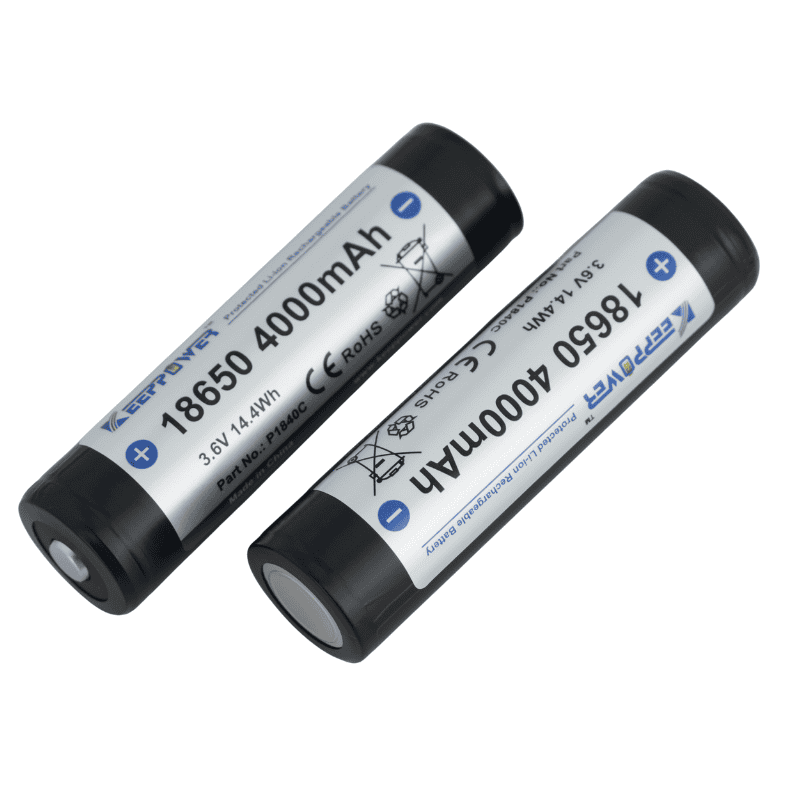
Protected lithium batteries are designed with an integrated protection circuit module, commonly known as a PCM. The circuit helps protect the battery from conditions such as overcharge, over-discharge, overcurrent and short circuit.
Keeppower’s classic protected battery range includes many popular cylindrical formats. The 18650 format is widely used because it offers a practical balance between size, capacity and availability. The 21700 format is larger and can provide higher capacity or improved current performance. The 26650 and 26800 formats are useful when a device requires larger energy storage in a cylindrical form.
Smaller formats such as 14500, 16340, 18350 and 18500 can be selected when the device has strict dimensional limitations. These formats are common in compact lighting equipment, measuring instruments and portable electronics.
Protection is especially important when the battery is installed in equipment that does not include its own battery management system. For example, a protected battery can be a practical choice for a flashlight, sensor, portable testing instrument or electronic accessory.
Customers who need built-in charging can also review Keeppower’s USB protected batteries. USB Type-C and Micro USB charging interfaces can simplify charging for portable products and reduce the need for a separate external charger.
High-Capacity and High-Discharge Battery Cells
Capacity and discharge performance are two different battery characteristics.
Capacity is usually expressed in milliampere-hours or ampere-hours. It indicates how much charge the battery can theoretically deliver over time. A higher-capacity battery may extend the operating time of a device.
Discharge capability describes how much current the battery can deliver safely and consistently. A device with a motor, actuator, high-power LED or wireless transmitter may require strong short-term current performance even if its total operating time is relatively short.
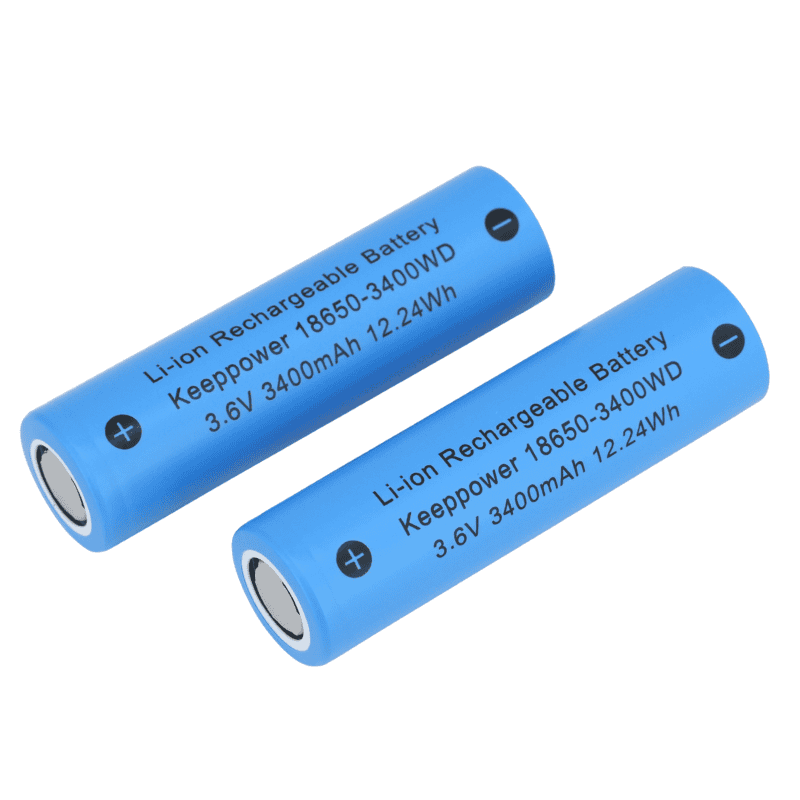
Keeppower’s high-capacity cell range is suitable for applications that prioritize longer runtime. These cells may be useful in industrial instruments, portable power devices, backup systems and equipment that is difficult to recharge frequently.
For applications requiring higher current, customers can review the high-discharge battery range. Keeppower also classifies high-discharge cells by discharge level, including cells rated at up to 3C, 3C–8C and 8C or higher.
The correct choice depends on the device’s actual current profile. Engineers should examine continuous current, peak current, pulse duration and thermal conditions instead of selecting a battery only by its nominal capacity.
Custom Lithium Battery Packs for OEM Applications
Standard cylindrical batteries are convenient, but many commercial and industrial products require a battery pack with a specific voltage, capacity, connector, shape or communication interface.
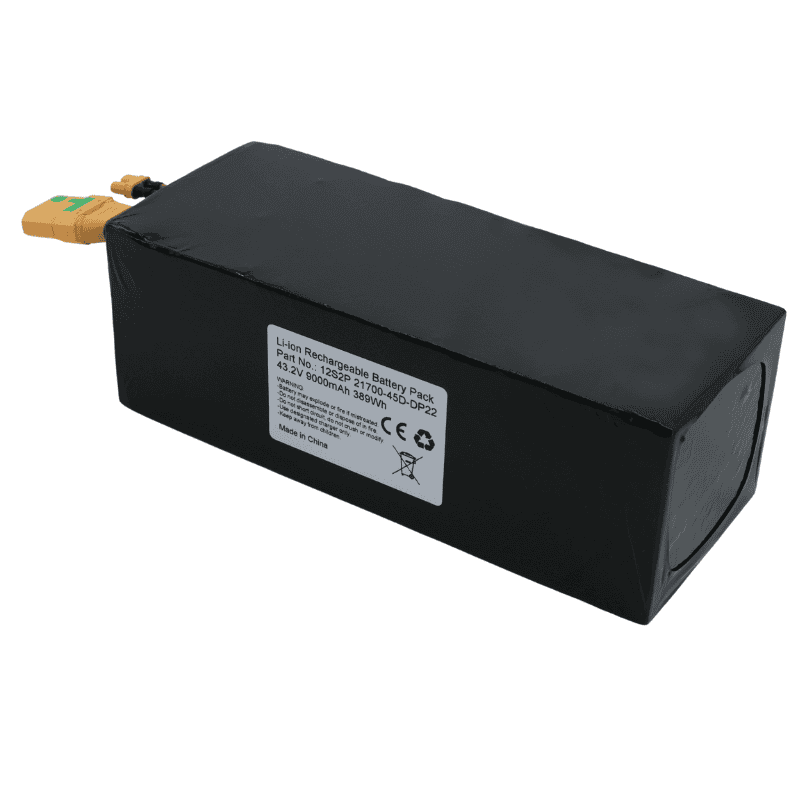
Keeppower’s customized battery pack category covers a variety of configurations, including Li-ion 18650 packs, Li-ion 21700 packs, prismatic battery packs and LiFePO4 battery packs.
Battery packs can be configured in series and parallel:
- Series connection: Increases the total voltage.
- Parallel connection: Increases the total capacity and current capability.
- Series-parallel connection: Combines higher voltage with higher capacity.
For example, a 2S1P pack uses two cells connected in series, while a 2S2P pack uses two series groups with two cells in parallel in each group. The final design must also account for cell matching, balancing, protection circuitry, wiring and thermal management.
Keeppower lists custom battery solutions for several application areas, including:
- Medical equipment
- Smart locks
- Radios
- Toys and lighting products
- Power tools
- FPV drones and UAVs
- Sonar systems
- ROVs and AUVs
- Robots
- Hydrofoil surfboards
- Industrial instruments
Customers developing specialized equipment can use Keeppower’s application-specific battery pack options as a starting point before discussing voltage, capacity, dimensions and connector requirements with the engineering team.
Battery Chemistry and Configuration Selection
Lithium-ion batteries are popular because of their high energy density and broad range of available formats. They are suitable for many portable and industrial products.
Lithium iron phosphate, commonly called LiFePO4 or LiFePO4-IFR, is often selected when safety, thermal stability and cycle life are major priorities. Keeppower provides LiFePO4 battery packs for applications that require a different balance between energy density, safety and long-term operation.
When selecting a chemistry, engineers should evaluate:
- Required nominal voltage
- Maximum charging voltage
- Continuous and peak discharge current
- Operating temperature range
- Required cycle life
- Available installation space
- Charging method
- Protection and certification requirements
Cell configuration is equally important. A compact product may require a custom-shaped pack, while a high-power system may need multiple cells, thermal sensors and a robust battery management system.
Battery Safety and Protection Features
Battery safety depends on cell quality, protection electronics, pack construction and correct charging.
A properly designed lithium battery solution may include:
- Overcharge protection
- Over-discharge protection
- Short-circuit protection
- Overcurrent protection
- Temperature monitoring
- Cell balancing
- Insulation and mechanical protection
- Correct connector polarity
- Suitable charger specifications
Keeppower provides related battery accessories such as connectors, battery cases, spacers, PCM components, USB adapters and USB cables. These components help manufacturers integrate battery cells into a reliable final product.
Temperature is another important consideration. Devices used outdoors, in industrial refrigeration, in aerospace-related environments or in cold regions may need specialized low-temperature cells. In such cases, engineers should avoid choosing a standard battery without reviewing its charging and discharging performance under low-temperature conditions.
<a id=”how-to-select-the-right-battery”></a>
How to Select the Right Battery
A practical battery selection process can follow these steps.
1. Define voltage requirements
Determine the device’s nominal voltage, operating voltage range and maximum allowable voltage. A battery with an unsuitable voltage may cause poor performance or damage.
2. Estimate energy demand
Calculate the expected power consumption and operating time. Capacity should be selected according to real usage rather than a theoretical maximum.
3. Check current requirements
Identify both continuous and peak current. Motors, transmitters and high-power LEDs may create short current peaks that a standard cell cannot support.
4. Confirm dimensions
Measure the available battery compartment, including length, diameter, connector clearance and space for insulation or thermal protection.
5. Select protection features
Decide whether the device already has a battery management system. If it does not, an integrated protected battery may be more suitable.
6. Consider charging
Check whether the product uses an external charger, USB Type-C charging, Micro USB charging or a dedicated charging circuit. Keeppower also provides chargers and power banks for compatible applications.
7. Evaluate environmental conditions
Review temperature, humidity, vibration, impact and waterproofing requirements. Outdoor and industrial devices may require a customized enclosure or additional sealing.
8. Discuss customization
For OEM products, provide drawings, voltage, capacity, current, connector type, protection requirements and expected order volume. These details help the manufacturer recommend a suitable configuration.
Keeppower Product Categories at a Glance
Keeppower’s product portfolio can be summarized as follows:
- Protected batteries: Ready-to-use cylindrical rechargeable batteries with protection functions.
- USB rechargeable batteries: Batteries with integrated USB charging interfaces.
- High-capacity cells: Suitable for longer runtime and energy storage.
- High-discharge cells: Suitable for demanding current requirements.
- Custom battery packs: Designed around the electrical and mechanical requirements of OEM equipment.
- LiFePO4 packs: Suitable for applications that prioritize safety and cycle life.
- Chargers and power banks: Charging and portable power solutions.
- Accessories: Components used for battery integration and pack assembly.
For new product development, customers can also review the company’s About Us page to learn more about its manufacturing capabilities and technical background. For project discussions, specifications and quotations, the Contact Us page provides the appropriate communication channel.
Frequently Asked Questions
What is the difference between a protected battery and a battery pack?
A protected battery is often a single cell with an integrated protection circuit. A battery pack generally contains multiple cells connected in series, parallel or series-parallel, together with protection, wiring, connectors and sometimes temperature sensors.
Are 18650 batteries and 21700 batteries interchangeable?
Not always. They have different physical dimensions, capacities and current characteristics. The battery compartment and electrical design must support the selected format.
When should I choose a high-discharge battery?
Choose a high-discharge battery when the device has high continuous current, high startup current or short-duration power peaks. Examples include power tools, motors, high-output lighting and some robotic systems.
Are LiFePO4 batteries safer than standard lithium-ion batteries?
LiFePO4 chemistry is generally recognized for strong thermal stability and safety characteristics. However, every lithium battery still requires correct charging, protection and mechanical design.
Can Keeppower customize connectors and battery dimensions?
Keeppower’s customized battery pack category includes various pack configurations and connector options. OEM customers should provide the required voltage, capacity, dimensions, connector, current and protection specifications for evaluation.
Does Keeppower provide battery accessories?
Yes. The website lists accessories including connectors, PCM components, battery cases, spacers, USB adapters and USB cables.
How can I request a quotation?
You can review the relevant product category first, then contact Keeppower through its Contact Us page with your technical requirements and project information.
Conclusion
The best industrial lithium battery solution depends on the complete application rather than one specification. Capacity, discharge current, chemistry, protection, dimensions, charging method and operating environment must all be considered together.
Keeppower offers a broad product portfolio that covers protected cylindrical batteries, USB rechargeable batteries, high-capacity cells, high-discharge cells, Li-ion battery packs, LiFePO4 packs, chargers, power banks and accessories. This structure allows customers to begin with an off-the-shelf battery or move toward a customized OEM battery pack when the project requires more precise integration.
For reliable product development, start by defining the electrical, mechanical and environmental requirements. Then compare the available battery categories and contact Keeppower for a solution that matches the equipment’s real operating conditions.