USB rechargeable lithium batteries have become increasingly popular in portable electronic products. Instead of removing the battery and placing it in a separate charger, users can connect a USB cable directly to the battery or device.
This charging method is convenient for flashlights, portable instruments, emergency equipment, wireless products and other small electronic devices. USB Type-C and Micro USB interfaces can make battery charging easier for users who already carry a phone charger, laptop adapter or portable power bank.
However, a USB rechargeable battery is more than a standard battery with a charging port. It usually includes an integrated charging circuit, protection functions, a connector and electrical components that control the charging process. The battery must be compatible with the equipment, charger, current requirement and available installation space.
Keeppower provides protected batteries, USB rechargeable batteries, cylindrical lithium batteries, high-capacity cells, high-discharge batteries and customized battery packs. Its product categories include USB Type-C and Micro USB battery options for different portable applications.
This guide explains how USB rechargeable lithium batteries work, what benefits they offer and how to choose the correct product.
Table of Contents
- What Are USB Rechargeable Lithium Batteries?
- How USB Charging Works
- USB Type-C and Micro USB Batteries
- Main Benefits of USB Rechargeable Batteries
- Protection and Safety Features
- Capacity, Voltage and Runtime
- Common Applications
- USB Batteries Compared with Standard Rechargeable Batteries
- How to Choose the Right USB Battery
- Frequently Asked Questions
What Are USB Rechargeable Lithium Batteries?
USB rechargeable lithium batteries are rechargeable lithium cells with an integrated USB charging interface. The interface allows users to connect a charging cable directly to the battery.
A typical USB rechargeable battery may contain:
- Lithium-ion cell
- Charging circuit
- Overcharge protection
- Over-discharge protection
- Short-circuit protection
- Current control
- USB connector
- Indicator light
- Protective housing
The USB charging circuit controls the current and voltage supplied to the cell. This reduces the need for a separate external charger and can make the product easier to use.
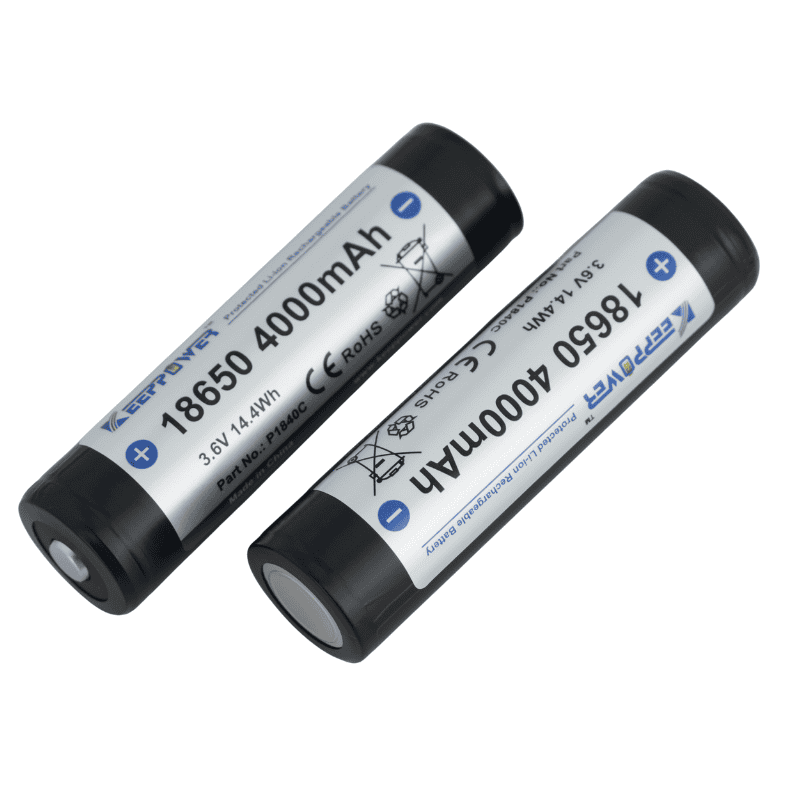
Keeppower offers USB protected battery products in different cylindrical formats. These products are designed for users who need rechargeable power with convenient charging.
How USB Charging Works
USB charging begins when the battery is connected to a compatible power source. The charging circuit inside the battery regulates the input and controls the charging process.
A lithium battery is not charged by applying a fixed voltage without control. The charging system generally uses a controlled current phase followed by a controlled voltage phase. When the battery reaches its target voltage, the charging current gradually decreases.
The charging circuit may also monitor:
- Battery voltage
- Charging current
- Temperature
- Charge completion
- Abnormal conditions
- Short circuit or overload
The power source may be a wall adapter, computer USB port, car adapter or portable power bank. The actual charging performance depends on the battery circuit, cable, power source and battery condition.
Users should use a suitable cable and avoid damaged connectors. The battery should not be charged in conditions outside its specified temperature range.
USB Type-C and Micro USB Batteries
Keeppower lists USB rechargeable batteries with both USB Type-C and Micro USB interfaces.
USB Type-C
USB Type-C is a modern connector with a reversible plug. Users can insert the cable in either orientation, which improves convenience.
Advantages of USB Type-C include:
- Reversible connection
- Common availability
- Good mechanical usability
- Compatibility with many modern devices
- Convenient cable design
USB Type-C batteries are suitable for newer portable products and users who already use Type-C charging cables.
Micro USB
Micro USB has been used widely in portable electronics for many years. It remains compatible with many existing chargers, cables and accessories.
Advantages of Micro USB include:
- Broad compatibility with older products
- Low-cost cables
- Familiar charging method
- Easy integration into compact designs
When selecting a USB rechargeable battery, the connector type should match the user’s cable and the available space in the device.
Customers can review the USB Type-C battery category and compare it with the Micro USB battery category.
Main Benefits of USB Rechargeable Batteries
USB rechargeable lithium batteries provide several practical advantages.
Convenient charging
Users can charge the battery with a common cable instead of carrying a separate dedicated charger.
Lower equipment requirements
A product manufacturer may not need to supply a separate battery charger for every device.
Easy charging during travel
USB ports are available in computers, vehicles, wall adapters, power banks and many public charging environments.
Reduced battery replacement
Rechargeable operation reduces the need to purchase disposable batteries.
Simple user experience
An indicator light can show charging status, helping users understand whether the battery is charging or fully charged.
Flexible product design
USB charging can be integrated into flashlights, portable tools, sensors and other compact products.
Potentially lower operating cost
A rechargeable battery can reduce the long-term cost of repeatedly buying disposable batteries.
The actual environmental and economic benefits depend on the battery’s service life, charging habits, materials and disposal process.
Protection and Safety Features
Protection is essential for USB rechargeable lithium batteries because the charging circuit is integrated directly into the battery.
A protected USB battery may include:
- Overcharge protection
- Over-discharge protection
- Overcurrent protection
- Short-circuit protection
- Temperature protection
- Charging control
- Reverse-polarity protection
- Automatic charging cutoff
The protection circuit should be matched to the cell and intended application. If the equipment draws more current than the battery can provide, the protection circuit may disconnect the output.
This is especially important for products with motors, high-power LEDs or wireless transmitters. A standard USB rechargeable cell may be suitable for low or moderate current, while a high-power product may require a different high-discharge design.
Keeppower also provides high-discharge battery products for applications that require stronger current performance.
Capacity, Voltage and Runtime
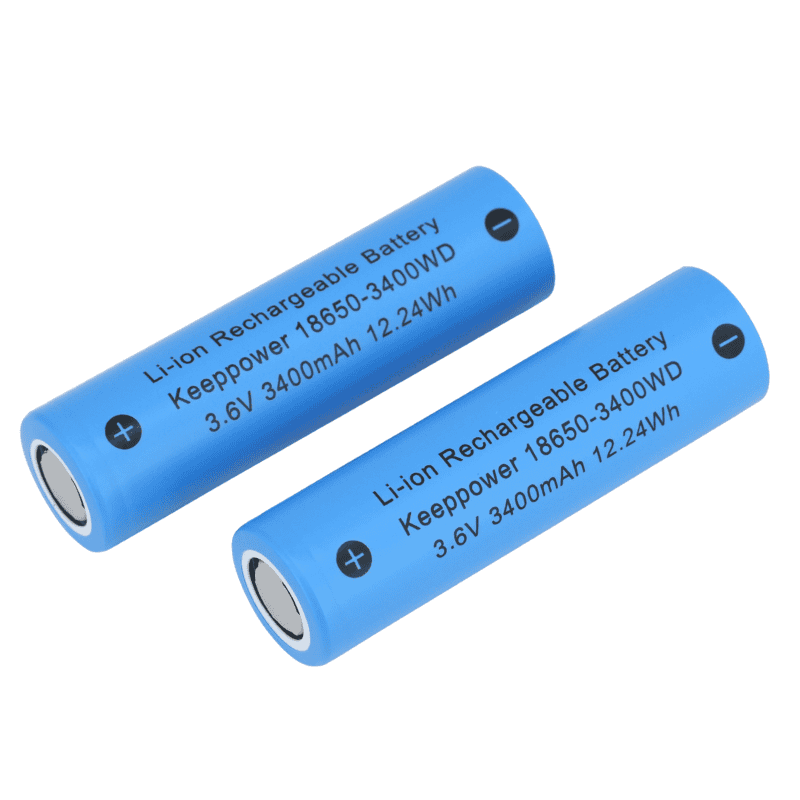
USB rechargeable batteries are available in different sizes and capacities. Common cylindrical formats include 14500, 16340, 18350, 18650 and other types.
Capacity is normally expressed in milliampere-hours. A higher-capacity battery can provide longer runtime under the same load, but it may also be larger or heavier.
Runtime depends on:
- Battery capacity
- Device power consumption
- Operating mode
- Voltage conversion efficiency
- Battery age
- Temperature
- Protection circuit behavior
- Wireless communication activity
For example, a portable sensor that consumes very little current may operate for a long time from a small battery. A high-output flashlight may consume much more power and require a higher-capacity or high-discharge cell.
Customers can compare different formats through Keeppower’s classic protected battery range.
Common Applications
USB rechargeable lithium batteries are useful in many products.
Flashlights
USB charging allows users to recharge a flashlight without removing the battery. This is convenient for outdoor users, workers and emergency equipment.
Portable instruments
Measurement devices and testing tools can use USB batteries for convenient field charging.
Wireless sensors
Sensors installed in homes, laboratories or industrial environments may benefit from simple charging and compact battery formats.
Emergency equipment
Portable emergency lights, radios and signaling equipment can be recharged from power banks or vehicle USB ports.
Electronic accessories
Small fans, personal devices, smart locks and other accessories may use USB rechargeable batteries.
Consumer electronics
USB batteries can provide a convenient replacement for disposable batteries in selected products.
Lighting products
Portable lamps and compact high-output lights often use cylindrical lithium batteries with integrated charging.
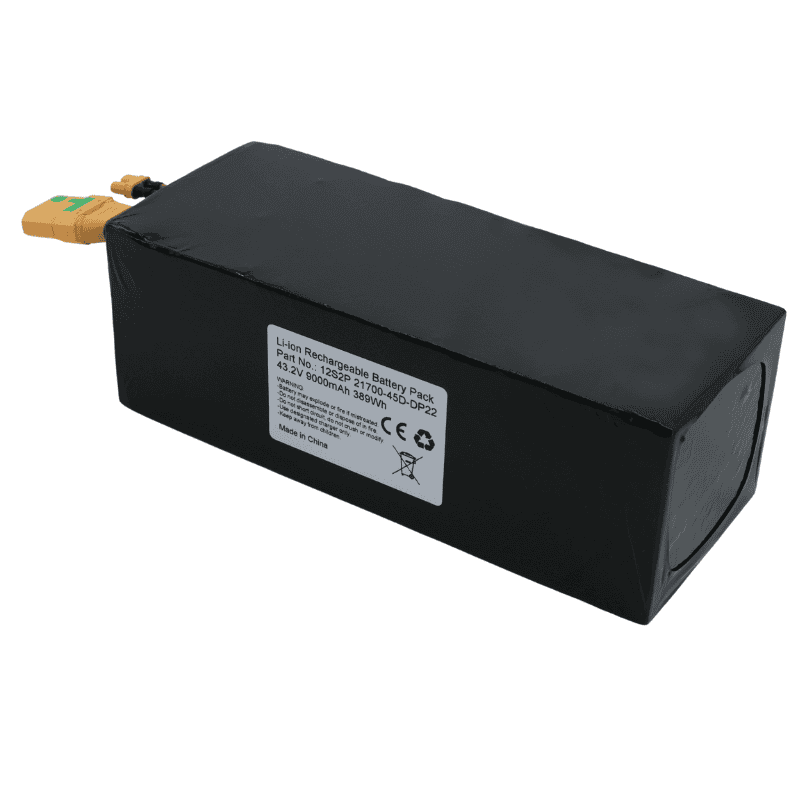
For specialized equipment, a manufacturer may choose a custom pack instead of a single USB rechargeable cell. Keeppower provides custom battery pack solutions for products that require specific voltage, capacity, connectors or dimensions.
USB Batteries Compared with Standard Rechargeable Batteries
USB rechargeable batteries and standard rechargeable batteries both provide reusable power, but they have different design characteristics.
| Feature | USB rechargeable battery | Standard rechargeable battery |
|---|---|---|
| Charging method | Direct USB cable | External charger usually required |
| User convenience | High | Depends on charger availability |
| Integrated electronics | Usually included | May be external |
| Product replacement | Simple for compatible devices | Requires suitable charger |
| Current capability | Depends on internal circuit | May support higher current |
| Design flexibility | Convenient for portable products | More flexible for custom systems |
| Best use | Everyday portable devices | High-performance or specialized equipment |
USB rechargeable batteries are convenient, but the integrated charging circuit occupies internal space. Products that require very high current, unusual charging or multi-cell configurations may need a custom pack with a separate charger and battery management system.
How to Choose the Right USB Battery
Follow these steps when selecting a USB rechargeable battery.
Step 1: Confirm the battery size
Check the required diameter, length and terminal design. The battery must fit the device securely.
Step 2: Check nominal voltage
Confirm that the battery voltage matches the equipment. A compatible physical size does not guarantee electrical compatibility.
Step 3: Estimate capacity
Calculate the expected runtime and select a capacity that meets the application’s requirements.
Step 4: Check current demand
Determine the device’s continuous and peak current. A USB battery designed for low-current equipment may not support a high-power load.
Step 5: Select USB connector type
Choose USB Type-C or Micro USB according to the user’s cable, product design and available installation space.
Step 6: Review charging time
Charging time depends on battery capacity, charging current and power source. A larger battery may require more time to charge.
Step 7: Confirm protection functions
Check overcharge, over-discharge, short-circuit, overcurrent and temperature protection.
Step 8: Consider temperature
If the product will operate outdoors or in cold environments, check the permitted charging and discharge temperatures.
Step 9: Evaluate the indicator
An LED indicator can show charging status, but the design should avoid unnecessary power consumption.
Step 10: Request a custom solution if needed
For unusual voltage, shape, current or connector requirements, contact the manufacturer about a custom battery pack.
USB Rechargeable Battery Selection Table
| Product requirement | Recommended consideration |
|---|---|
| Simple everyday charging | USB Type-C or Micro USB protected battery |
| Compact flashlight | 16340, 18350 or similar format |
| Longer runtime | Higher-capacity 18650 or 21700 cell |
| High-power equipment | High-discharge battery |
| Multi-cell product | Custom battery pack and protection system |
| Outdoor use | Temperature and environmental testing |
| Medical or industrial use | Controlled pack design and documentation |
| Existing older charger | Micro USB option |
| Modern charging ecosystem | USB Type-C option |
Frequently Asked Questions
What is a USB rechargeable lithium battery?
It is a rechargeable lithium battery with an integrated USB charging interface and charging control circuit.
Can I charge a USB battery with a phone charger?
Generally, a compatible USB power source can be used, but the charger, cable and battery must be suitable for the product. Always follow the battery specifications.
Are USB Type-C batteries better than Micro USB batteries?
USB Type-C is newer and reversible, while Micro USB remains compatible with many older products. The best choice depends on the product and user requirements.
Can a USB rechargeable battery power a high-current device?
It depends on the cell and integrated protection circuit. High-current equipment should use a battery specifically rated for the required continuous and peak current.
Does a USB rechargeable battery need an external charger?
Usually, no. The charging circuit is integrated into the battery. However, some multi-cell or high-power battery packs require a separate charger or charging system.
How long does a USB rechargeable battery last?
Service life depends on charging frequency, discharge depth, temperature, current and battery quality. Correct charging and storage can help extend its useful life.
Can Keeppower supply custom USB battery packs?
Keeppower provides customized battery packs. A project can include specific cells, USB charging, connectors, protection circuits, wires and housing requirements.
What details should I provide for a quotation?
Provide battery format, voltage, capacity, current, USB interface, dimensions, charging method, operating temperature and estimated quantity.
Conclusion
USB rechargeable lithium batteries offer a convenient way to power portable electronic products. Direct charging through USB Type-C or Micro USB reduces the need for a separate charger and makes daily use simpler.
The correct battery must still be selected carefully. Product designers should verify size, voltage, capacity, current, charging time, protection functions, temperature range and connector type.
For compact and moderate-power products, a protected USB rechargeable battery may provide an efficient solution. For higher-power equipment or multi-cell systems, a custom battery pack may be more suitable.
Keeppower offers USB protected batteries, classic cylindrical batteries, high-capacity cells, high-discharge products, chargers, accessories and customized battery packs. By matching the battery format and charging method to the actual application, manufacturers can create portable products that are easier to use and more reliable.