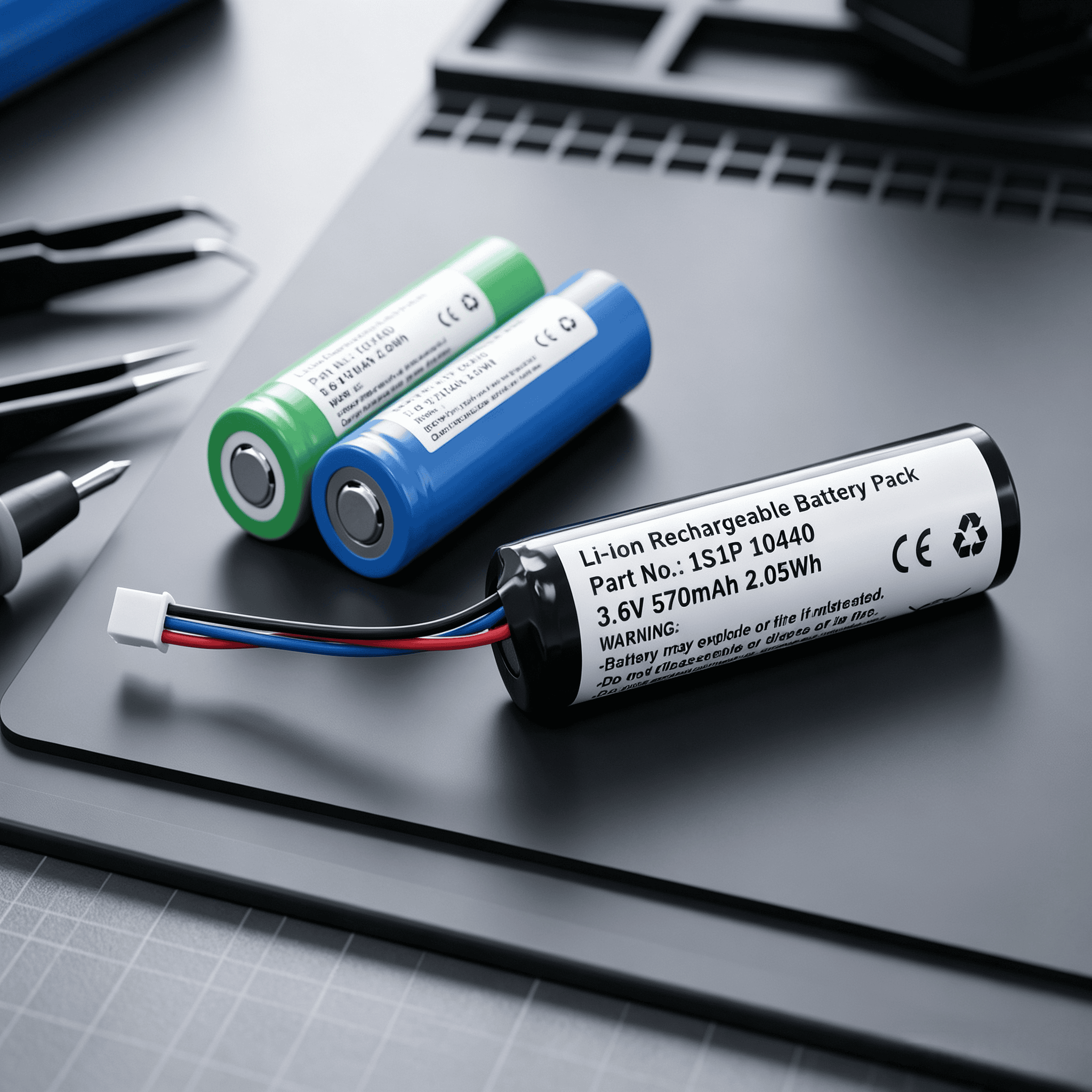
Selecting a medical device battery pack requires more than matching voltage and capacity. The pack supports a defined clinical or diagnostic function, so battery behavior must be considered in the equipment’s risk management, hälyttimet, lataaminen, maintenance, cleaning, varastointi, and expected service life. The device manufacturer remains responsible for defining applicable standards, regulatory pathways, and validation evidence for the final product.
A clear OEM specification begins with the use environment and consequence of power loss. A portable monitor, infusion-related accessory, imaging subsystem, home-care device, and laboratory instrument can have very different needs for runtime, redundancy, state-of-charge accuracy, hot swapping, and backup behavior.

Translate clinical use into engineering requirements
Define the full device voltage window and current profile, including startup, pumps, heaters, radios, displays, hälyttimet, and processor peaks. Determine how the device behaves at low state of charge and whether it must complete a procedure, preserve data, or transition to another supply. Runtime requirements should include reserve and end-of-life capacity.
Protection and monitoring may include cell-group voltage, pack current, multiple temperature points, balancing, short-circuit and overcurrent response, charge control, state-of-charge estimation, cycle logging, and authenticated communication. The architecture should align with the equipment hazard analysis rather than rely on a generic BMS checklist.
Tekniset tiedot, joilla on merkitystä todellisessa laitteessa
Document chemistry, cell manufacturer and model, configuration, nominal and maximum voltage, minimikapasiteetti, energiaa, continuous and peak current, charge method, temperature ranges, enclosure materials, mitat, mass, liitin, cable, communication protocol, expected cycle and calendar life, varastointi, transport, and traceability.
Cleaning agents, sterilization approach, ingress, drop, vibration, electromagnetic environment, and user access can affect pack design. Many batteries are not intended to be sterilized directly, so the equipment’s barrier and service procedure must be defined. Labeling and replacement instructions should prevent incompatible packs from being installed.
| OEM question | Battery implication | Evidence |
|---|---|---|
| What happens on power loss? | Reserve, hälyttimet, redundancy | Risk analysis and device test |
| Who replaces the pack? | Liitin, kotelo, keying | Usability and service validation |
| Where is it used? | Lämpötila, ingress, cleaning | Environmental qualification |
| How is it tracked? | Lot and lifecycle records | Traceability system |

Kuinka tehdä oikea valinta
Engage the battery supplier early enough to influence enclosure, liitin, laturi, and thermal design. A late request for a pack that must fit a fixed cavity can force compromises. Provide drawings, electrical waveforms, use cases, and risk controls rather than a short request for voltage and mAh.
Plan for component change control and supply continuity. Cell models and electronic components evolve, and a substitute may require engineering assessment and revalidation. Define notification, approval, jäljitettävyys, and documentation expectations in the supplier relationship.
Yleisiä virheitä välttää
Do not size runtime from a new cell at room temperature without accounting for aging, cold or hot conditions, conversion loss, and reserve. Do not assume a fuel-gauge percentage is accurate without calibration across the intended load and life profile.
Avoid unkeyed connectors or mechanically compatible packs with incompatible voltage or firmware. Do not overlook shipping and service state of charge, spare-battery storage, damaged-pack handling, and end-of-life replacement instructions.
Sovellus- ja OEM-näkökohdat
Portable diagnostic equipment may prioritize energy density and accurate state reporting. Home-use devices require clear user interaction and safe replacement. Clinical carts may need rapid charging and frequent cycling. Laboratory instruments may need long calendar life and traceable scheduled maintenance.
Verification should include normal operation and foreseeable misuse, charger faults, blocked ventilation, connector cycling, battery depletion, alarm behavior, hot and cold operation, transport, varastointi, and aged packs. Testing must be planned by the medical-device manufacturer within its applicable quality and regulatory framework.

Toiminut esimerkki
A portable device must operate for eight hours and provide a 30-minute low-battery reserve. The engineering team measures power across display brightness, wireless transmission, hälyttimet, and worst-case processing. It then applies conversion loss and end-of-life capacity assumptions before setting minimum pack energy. The low-battery threshold is validated with aged representative packs, not only new samples.
Turvallisuus, vahvistusta, ja ostokuri
Akun valinnan ei tulisi koskaan perustua pelkästään suurimman kapasiteetin määrään. Varmista laitteen valmistajan sallimat kemiat, nimellisjännite, enimmäislatausjännite, vastakkaisuus, terminaalin tyyli, fyysinen kirjekuori, ja jatkuvat ja huippuvirtavaatimukset. Mekaanisesti sopiva kenno voi silti olla sähköisesti viallinen. For medical device battery packs, turvallisin tapa on käsitellä laiteopasta ja akun tietolehteä yhteensovitettuna parina sen sijaan, että oletetaan, että kaksi samannimistä kennoa ovat keskenään vaihdettavissa.
Osta jäljitettävältä toimittajalta ja tarkista nykyinen tekniset tiedot, suojauksen yksityiskohdat, testidokumentaatio, ja tarkan mallin kuljetustiedot. Pidä solut poissa irtonaisista metalliesineistä, vettä, murskaamalla, puhkaisu, liiallinen kuumuus, ja luvaton muuttaminen. Lopeta epätavallisen kuuman akun käyttö, turvonnut, kolhuttu, syöpynyt, vuotaa, tai mekaanisesti vaurioitunut. Käytä yhteensopivaa laturia äläkä koskaan ylitä ilmoitettua latausvirtaa tai -jännitettä. Nämä käytännöt tukevat luotettavaa toimintaa, mutta eivät korvaa laitteen mukana toimitettuja ohjeita, laturi, tai akku.
Käytännöllinen valintatyönkulku
- Aloita kuormituksesta. Tallenna nimellisjännite, käyttövirta, huippuvirta, suoritusaikatavoite, ja käyttömäärä.
- Tarkista lokero. Mittaa käytettävissä oleva halkaisija, pituus, liittimen välys, terminaalin tyyppi, ja jousen puristus.
- Valitse turvallisuusarkkitehtuuri. Päätä, odottaako sovellus suojattua solua, suojaamaton solu, jota isäntä hallitsee, tai täydellinen pakkaus BMS:llä tai PCM:llä.
- Vastaa latausta. Tarkista kemia, enimmäislatausjännite, latausvirta, lopetusmenetelmä, ja lämpötilarajat.
- Vahvista todellinen järjestelmä. Testaa edustavia akkuja lopullisessa laitteessa odotetulla lämpötila- ja kuormitusalueella ennen tuotannon hyväksymistä.
Tämä työnkulku on erityisen tärkeä OEM-ohjelmille. Akun käyttäytyminen riippuu solukemian vuorovaikutuksesta, suojaelektroniikkaa, mekaaninen pakkaus, laiteohjelmisto, lataaminen, ja käyttäjäympäristö. Varhainen validointi on halvempaa kuin akkutilan tai tehovaiheen uudelleensuunnittelu työkalujen valmistumisen jälkeen.
Usein kysytyt kysymykset
What information should an OEM give a battery supplier?
Voltage window, load profile, runtime and reserve, mitat, liitin, lataaminen, lämpötila, communication, life, environment, and compliance expectations.
Is capacity the main medical battery requirement?
Ei. Reliability, monitoring, hälyttimet, jäljitettävyys, suoja, service strategy, and validation are equally important.
Can a commercial battery pack be used directly?
Only after the device manufacturer confirms electrical, mechanical, turvallisuutta, regulatory, and lifecycle suitability for the intended equipment.
How should cell changes be managed?
Through documented notification, engineering assessment, jäljitettävyys, risk review, and any required revalidation.
Aiheeseen liittyvät Keeppower-resurssit
- Räätälöidyt akkupaketit
- Suojattu 18650 paristot
- Suojattu 21700 paristot
- Low-temperature batteries
- Temperature-protection series
- Laturit ja virtapankit
- Tietoja Keeppowerista
- Ota yhteyttä Keeppoweriin
Johtopäätös
A medical device battery pack is part of the equipment’s safety and lifecycle strategy. Convert clinical use into measurable electrical, mechanical, environmental, monitoring, jäljitettävyys, and service requirements. Involve the battery partner early, manage changes formally, and validate representative aged packs in the final device under the manufacturer’s quality and regulatory process.
Tarvitsetko apua akun yhdistämisessä laitteeseen tai OEM-ratkaisun kehittämiseen? Ota yhteyttä Keeppoweriin jännitteen kanssa, nykyinen, suoritusaika, mitat, liitin, lataustapa, ja hankkeesi ympäristövaatimukset.