下面是第五篇全新的英文博客,主题为低温环境下的锂电池选型。文章不使用HTML锚点代码、尖括号标签或《》符号,内部链接已经直接嵌入文字中,可以直接复制到WordPress编辑器。
SEO Metadata
Titre SEO:
Piles au lithium basse température: How to Choose a Reliable Battery for Cold Environments
Meta Description:
Learn how low-temperature lithium batteries work, where they are used, how cold affects battery performance and how to select the right solution for outdoor and industrial equipment.
Slug:low-temperature-lithium-batteries-cold-environments
Focus Keyword:
low-temperature lithium batteries
Related Keywords:
- cold temperature lithium battery
- rechargeable battery for cold weather
- low-temperature battery pack
- batterie lithium-ion
- outdoor battery solution
- batterie au lithium personnalisée
- battery for industrial equipment
Piles au lithium basse température: How to Choose a Reliable Battery for Cold Environments
Many electronic devices must operate in environments where the temperature is far below normal room conditions. Examples include outdoor monitoring equipment, refrigerated logistics systems, scientific instruments, emergency communication devices, industrial sensors, marine equipment and products used in winter climates.
A standard rechargeable lithium battery may lose capacity, increase in internal resistance or become unsuitable for charging when exposed to low temperatures. If the battery is not selected and managed correctly, the equipment may experience shorter runtime, voltage drops, slow charging or unexpected shutdowns.
Low-temperature lithium batteries are designed to provide more stable performance in cold operating environments. Cependant, the term low-temperature battery does not describe one single specification. Engineers need to consider the minimum discharge temperature, minimum charging temperature, storage conditions, current requirement, pack configuration and thermal management.
Keeppower provides rechargeable lithium batteries, batteries protégées, low-temperature battery products, cellules de grande capacité, high-discharge cells and customized battery packs. Its product categories support portable, industrial and OEM applications that require reliable battery performance.
This guide explains how cold temperatures affect lithium batteries and how to select a battery solution for low-temperature applications.
Table des matières
- Why Low Temperature Affects Lithium Batteries
- Main Problems Caused by Cold Conditions
- Discharging at Low Temperature
- Charging at Low Temperature
- Storage and Transportation
- Low-Temperature Battery Applications
- Battery Chemistry and Cell Selection
- Battery Pack Design for Cold Environments
- How to Select a Low-Temperature Lithium Battery
- Foire aux questions
Why Low Temperature Affects Lithium Batteries
A rechargeable lithium battery relies on chemical reactions and ion movement inside the cell. When the temperature decreases, these processes become slower.
Low temperature can increase internal resistance and reduce the battery’s ability to deliver current. The available capacity may also decrease temporarily. Dans certains cas, the battery may recover part of its capacity after returning to a warmer environment, but repeated exposure to extreme temperatures can accelerate aging.
The effect of cold depends on:
- Cell chemistry
- Cell design
- State of charge
- Discharge current
- Charging current
- Exposure duration
- Battery insulation
- Battery pack configuration
- Temperature control system
A product designed for cold weather should be tested under the actual environmental conditions rather than evaluated only at room temperature.
Engineers can begin by reviewing the Keeppower product center and then comparing the available battery categories.
Main Problems Caused by Cold Conditions
Low temperatures can cause several performance problems.
Reduced available capacity
A cold battery may deliver less usable capacity than it can provide at room temperature. This reduces the operating time of the equipment.
Higher internal resistance
As internal resistance increases, the battery voltage may fall more quickly under load. High-current equipment is especially sensitive to this effect.
Lower peak current
A battery that can provide sufficient current at room temperature may struggle to support the same load in cold conditions.
Slower charging
Charging at low temperature can be more difficult and may damage certain lithium battery chemistries if the cell temperature is too low.
Voltage drop and shutdown
If the battery voltage falls below the equipment’s protection threshold, the device may shut down even though the battery still contains usable energy.
Reduced service life
Repeated exposure to extreme temperatures, especially combined with high current or unsuitable charging, can accelerate battery aging.
These problems should be addressed through cell selection, protection, enclosure design and thermal management.
Discharging at Low Temperature
Low-temperature discharge performance depends on the cell chemistry and design. Some batteries are designed to discharge at temperatures well below freezing, while others are intended only for moderate indoor conditions.
When selecting a battery for cold discharge, check:
- Minimum discharge temperature
- Continuous discharge current
- Peak discharge current
- Available capacity at the target temperature
- Voltage behavior under load
- Internal resistance
- Recovery performance after warming
- Protection circuit behavior
A battery’s nominal capacity is usually measured under a specific test condition. It may not represent the capacity available in a cold environment.
Par exemple, a battery rated at a certain capacity at room temperature may provide less energy when the equipment operates outdoors during winter. Donc, system designers should calculate the required battery capacity with a cold-temperature reserve.
Keeppower provides low-temperature battery products for applications that require improved performance in cold conditions.
Charging at Low Temperature
Charging is often more sensitive to low temperature than discharging.
If a lithium battery is charged below its recommended temperature range, metallic lithium may form on the anode. This can reduce battery capacity, increase safety risks and cause permanent damage.
A low-temperature battery system may therefore require:
- Temperature monitoring
- Charging cutoff at low temperature
- A battery heater
- Insulation
- Controlled charging current
- A warm-up period before charging
- A specialized charging algorithm
The device should not begin charging immediately after being removed from a cold environment unless the battery temperature is confirmed to be within the approved charging range.
For outdoor equipment, one practical approach is to separate the discharge and charging conditions. The battery may discharge in cold weather but be warmed before charging. Another approach is to use a battery pack with integrated heating and temperature monitoring.
The charger must also match the battery chemistry and series configuration. A low-temperature design does not eliminate the need for correct voltage and current control.
Storage and Transportation
Storage conditions influence battery performance and service life. A battery stored for a long period at extremely low or high temperatures may degrade more quickly.
Before storing a battery, manufacturers should define:
- Recommended storage temperature
- Recommended state of charge
- Maximum storage period
- Humidity limits
- Packaging requirements
- Inspection intervals
- Recharging procedure
During transportation, the battery may be exposed to rapidly changing temperatures. Condensation can form when a cold battery is moved into a warm and humid environment. Moisture can affect connectors, insulation and electronic protection circuits.
A battery pack should be allowed to reach a safe temperature before charging or installing it into sensitive equipment.
For industrial products, temperature logging during transportation can help confirm that the battery remained within the required conditions.
Low-Temperature Battery Applications
Low-temperature lithium batteries can be used in many products.
Outdoor monitoring equipment
Remote monitoring systems may be installed in mountains, forests, agricultural fields or construction sites. The battery must support long periods without maintenance.
Refrigerated logistics
Temperature-controlled transport equipment may operate inside refrigerated containers or cold storage facilities. The battery must provide stable power at low ambient temperatures.
Scientific instruments
Polar research, high-altitude measurement and environmental monitoring systems may require batteries that perform reliably below freezing.
Marine equipment
Marine sensors, underwater equipment and navigation products may experience cold water and outdoor conditions. The battery pack may also require waterproofing and pressure-resistant construction.
Appareils de communication d'urgence
Emergency equipment must remain available even when used outdoors in winter. Stable battery performance is critical for communication, lighting and location systems.
Robotics and drones
Robots and drones used in cold environments may require both high current and low-temperature performance. Motors and wireless systems can create large power demands.
Industrial sensors
Remote industrial sensors may be difficult to access after installation. A battery with poor cold-temperature performance can increase maintenance frequency.
For custom requirements, customers can review Keeppower’s solutions de batteries personnalisées.
Battery Chemistry and Cell Selection
Battery chemistry affects low-temperature performance, energy density, voltage and cycle life.
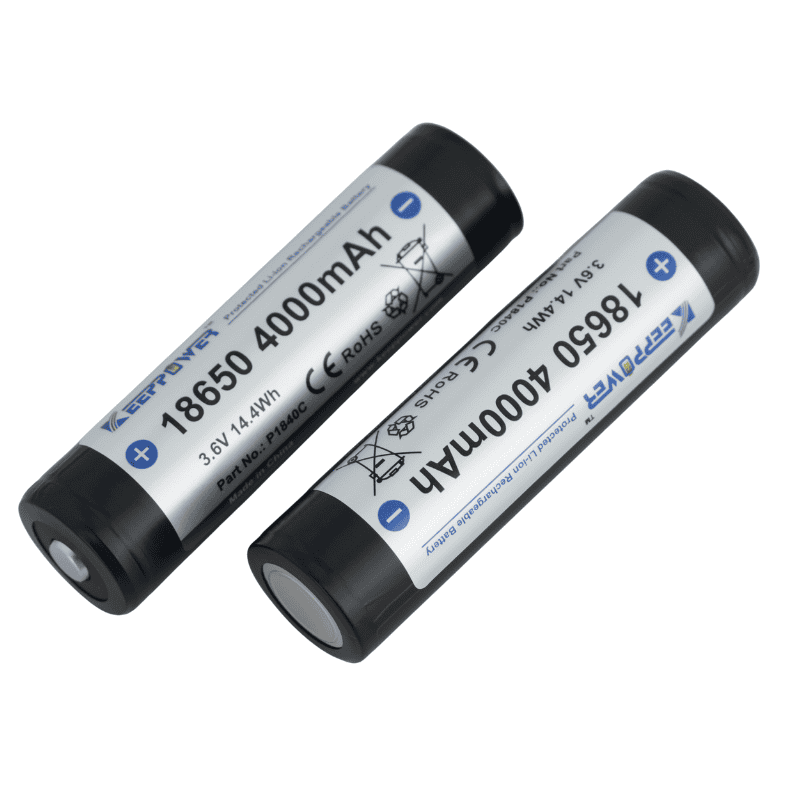
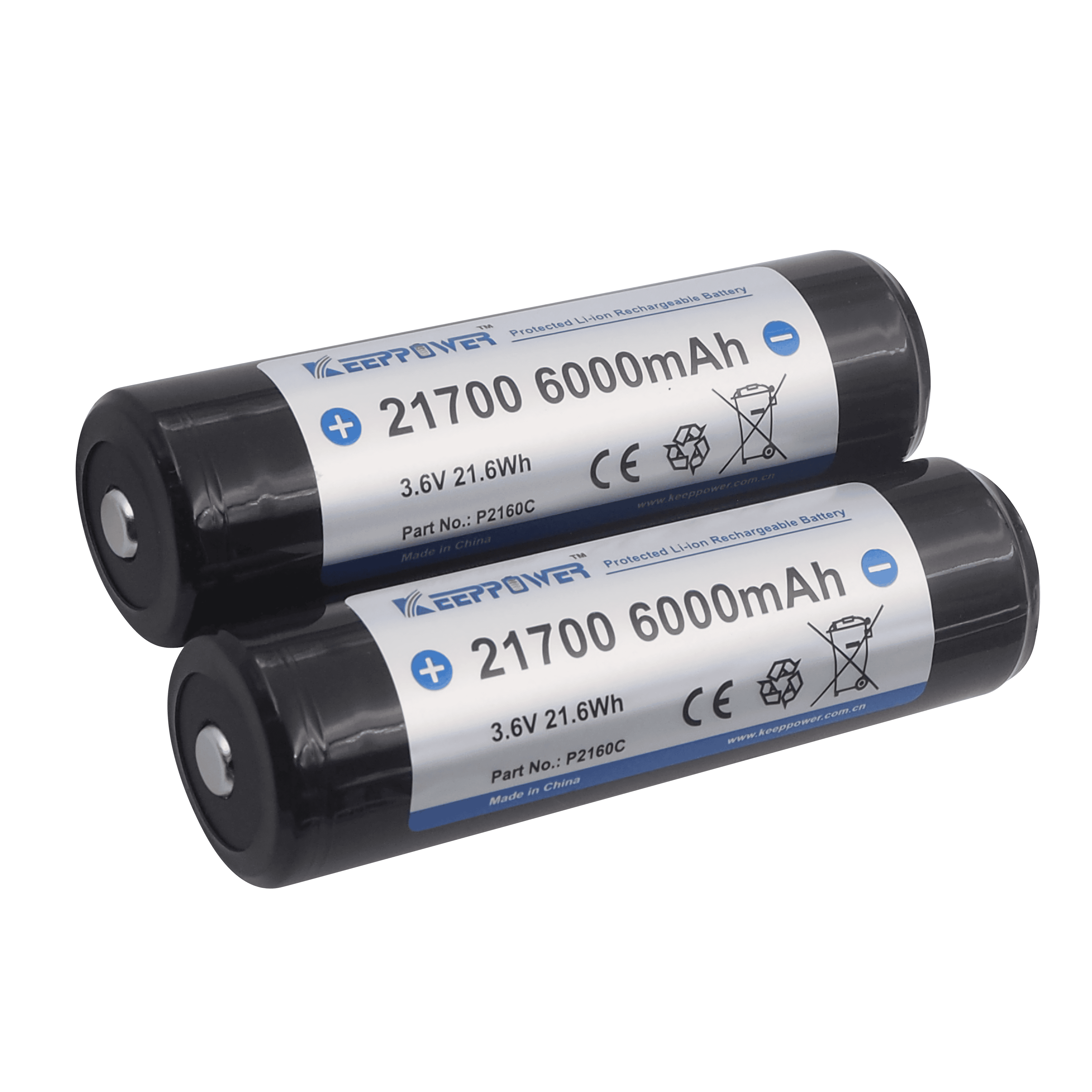
Conventional lithium-ion batteries can provide high energy density and are widely available in cylindrical formats such as 18650 et 21700. They may be suitable for compact outdoor equipment where weight and size are important.
LiFePO4 batteries offer strong thermal stability and long cycle life. They may be attractive for low-temperature systems that prioritize safety and long-term operation, although the available voltage and energy density must match the product design.
The chemistry should be selected based on:
- Minimum operating temperature
- Charging temperature
- Required voltage
- Required capacity
- Continuous current
- Peak current
- Cycle frequency
- Weight and size
- Exigences de sécurité
Keeppower classic protected battery range includes multiple cylindrical formats. For a product that requires higher energy storage, designers can also compare the company’s high-capacity battery cells.
Battery Pack Design for Cold Environments
A battery cell is only one part of a cold-weather power system. The battery pack enclosure and control system can strongly influence performance.
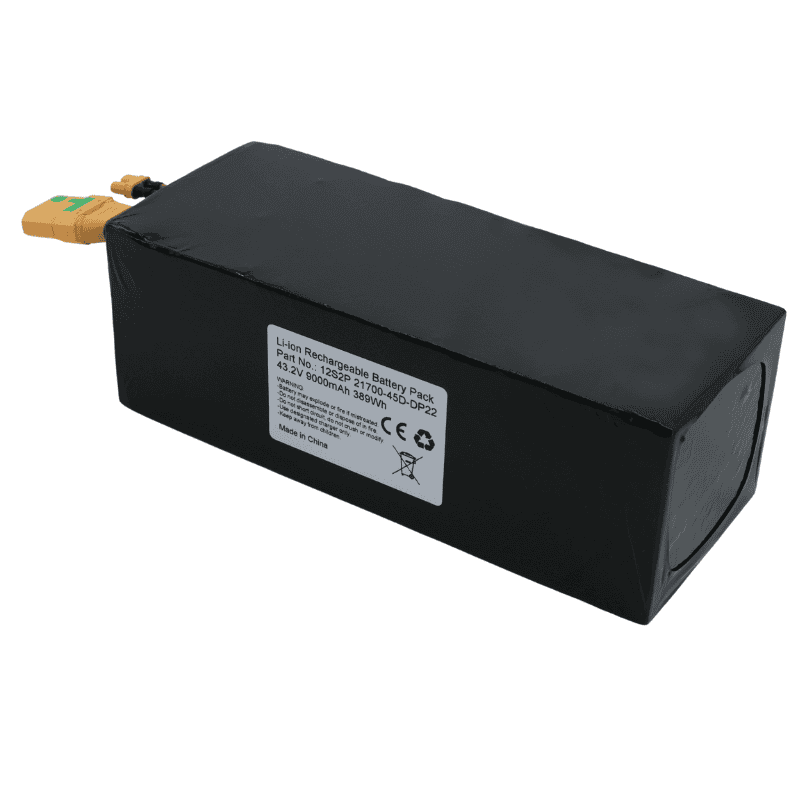
A low-temperature battery pack may include:
- Thermal insulation
- Flexible or rigid battery enclosure
- Temperature sensors
- Heating elements
- Battery management system
- Low-temperature charging cutoff
- Waterproof seals
- Shock-resistant mounting
- Custom connector
- Cell balancing
- Protective fuse or PCM
The enclosure should reduce heat loss while preventing excessive heat accumulation during high-current operation.
A battery heater may be used when the device must charge in a cold environment. The heater consumes energy, so the battery capacity calculation must include both the equipment load and the heating load.
The position of the temperature sensor is also important. Measuring the temperature only near the enclosure surface may not accurately represent the internal cell temperature.
For multi-cell packs, cells should be matched carefully. Differences in internal resistance may become more significant at low temperature and create uneven voltage behavior.
How to Select a Low-Temperature Lithium Battery
Follow these steps when selecting a battery for a cold application.
Étape 1: Define the temperature range
Identify the minimum and maximum temperatures for discharge, chargement, storage and transportation. These values may be different.
Étape 2: Calculate the real load
Record average power, courant de pointe, startup current and standby consumption. Include heaters, communication modules and motors.
Étape 3: Add a cold-temperature reserve
Do not base the capacity only on room-temperature performance. Include additional capacity to compensate for cold-related reduction.
Étape 4: Select the chemistry
Compare conventional Li-ion and LiFePO4 according to voltage, energy density, sécurité, cycle life and temperature requirements.
Étape 5: Confirm charging conditions
Determine whether the pack will charge in the cold or be warmed before charging. Select a suitable charger and protection strategy.
Étape 6: Design thermal management
Evaluate insulation, heating, ventilation, sensors and enclosure materials. The design should control both cold exposure and heat generation.
Étape 7: Choose protection functions
Consider overcharge, trop décharger, surintensité, court-circuit, temperature protection and cell balancing.
Étape 8: Test under real conditions
Test the complete device in the actual temperature range. Evaluate runtime, voltage stability, startup behavior, charging and recovery after warming.
Étape 9: Consider customization
If the product requires a special shape, connecteur, heating system or waterproof enclosure, request a custom battery pack instead of modifying a standard cell.
Comparison of Standard and Low-Temperature Battery Solutions
| Design factor | Standard lithium battery | Low-temperature battery solution |
|---|---|---|
| Room-temperature operation | Usually suitable | Suitable |
| Cold discharge | May be limited | Designed for improved performance |
| Cold charging | Often restricted | Requires controlled strategy |
| Thermal management | Basic or unnecessary | May require insulation or heating |
| Outdoor reliability | Depends on conditions | Better for demanding environments |
| Product development | Simpler | Requires additional testing |
| Cost | Usually lower | May be higher |
| Best use | Indoor or moderate conditions | Cold, outdoor and industrial applications |
Foire aux questions
What is a low-temperature lithium battery?
It is a lithium battery designed or selected to provide more reliable charging, discharging or storage performance in cold environments.
Can a standard lithium-ion battery work below freezing?
Some standard cells can discharge below freezing, but their capacity and current performance may decrease. Charging below the approved temperature range can damage the battery.
Can a low-temperature battery be charged in cold weather?
It depends on the specific cell and pack design. Some systems require a heater or warm-up period before charging.
How can I improve battery performance in cold weather?
Use a suitable low-temperature cell, add insulation, monitor temperature, control charging and include enough capacity reserve.
Is LiFePO4 suitable for cold environments?
LiFePO4 may be suitable when safety and cycle life are important, but its charging and discharge temperature limits must be checked for the selected product.
What equipment commonly uses low-temperature batteries?
Applications include outdoor monitoring equipment, refrigerated logistics, scientific instruments, marine systems, drones, robots, emergency equipment and remote industrial sensors.
Can Keeppower customize a low-temperature battery pack?
Keeppower provides customized battery packs. A project may include special dimensions, connecteurs, circuits de protection, temperature sensors and thermal management.
What information should I provide for a low-temperature battery quotation?
Provide the operating temperature, charging temperature, tension, capacité, actuel, dimensions, connecteur, durée d'exécution, environmental conditions and estimated order quantity.
Conclusion
Cold environments create additional challenges for rechargeable lithium batteries. Low temperatures can reduce capacity, increase internal resistance, limit current output and make charging unsafe if the battery is not properly controlled.
A reliable low-temperature battery solution should be selected according to the complete application. Engineers need to consider temperature range, capacity reserve, charging strategy, current demand, chimie, protection, enclosure design and thermal management.
Keeppower offers low-temperature batteries, protected cylindrical cells, produits de grande capacité, high-discharge batteries and customized battery packs. By combining the correct cell with appropriate protection and thermal design, manufacturers can improve the reliability of outdoor, industrial and cold-chain equipment.