目次
- 導入
- C-Rate Explained: What Does High Discharge Actually Mean?
- What Counts as a High-Discharge Application?
- Matching Discharge Rate to the Job
- Protected High-Discharge Batteries vs Bare Cells
- Protected R-series: safety plus current
- Bare high-discharge cells: maximum current for pack builders
- 熱管理と安全性
- How to Size a High-Discharge Pack
- キープパワー's High-Discharge Lineup
- よくある質問
- What does C-rate mean for a lithium battery?
- What is the difference between a protected and a bare high-discharge cell?
- Which cells are best for FPV drones?
- How many amps can a high-discharge 18650 deliver?
- Is it safe to run a battery at its maximum discharge rate?
- Can Keeppower build a custom high-discharge pack?
Contents
導入

A battery that lasts all day at 500 mA can still fail at 10 あ. High-power devices such as multi-LED flashlights, cordless power tools, FPVドローン, jump starters and electric surfboards demand a cell that can deliver high current without sagging voltage, overheating or dying early. Choosing the right high discharge lithium battery means matching the cell's continuous current rating to the device's peak demand, and deciding between protected and bare-cell constructions.
This guide explains C-rate, the discharge tiers Keeppower uses to organize its cell catalog, representative high-discharge cells and packs, and the thermal-management rules that keep high-current packs safe. All current ratings quoted are per Keeppower product pages. For a wider view of the subject, start with Keeppower's high-discharge lithium battery buying article.
C-Rate Explained: What Does High Discharge Actually Mean?
C-rate expresses a battery's discharge current relative to its capacity. A 1C discharge fully drains a cell in one hour; a 10C discharge drains it in six minutes. On a 3000 mAh cell, 1Cは 3 A and 10C is 30 あ. The C-rate matters because a cell rated for 10 A continuous will sag in voltage and run hot if the device pulls 20 あ, while a 35 A cell is overkill and wastes capacity in a device that draws 1 あ.
Manufacturers organize high-discharge cells by C-rate tiers because the application, not the capacity number, determines which cell belongs in the pack. あ 3500 mAh cell that only sustains 10 A is excellent for a flashlight but inadequate for a drone; ある 2500 mAh cell that sustains 35 A may be exactly right for the drone even though its capacity looks lower. キープパワー's related article on battery capacity vs discharge rate works through this trade-off in detail.
A second rule is that usable capacity falls as the C-rate rises. A cell rated 3000 mAh at a light load may deliver noticeably less at 10C, because internal resistance heats the cell and wastes energy before it reaches the load. The practical takeaway is simple: when the application is current-hungry, do not buy the smallest cell that looks adequate on paper. Buy a cell whose rated continuous current already covers the peak draw, with margin to spare.
What Counts as a High-Discharge Application?
Not every device needs a high-discharge cell, but these categories do. Flashlights pull several amps on high-lumen modes through a single 18650. Cordless power tools draw 10 に 30 A bursts, so cells are usually paralleled in packs. FPV drones and UAV demand continuous high current under motor load. Automotive and workshop equipment such as jump starters, tire inflators and diagnostic tools need short, very high pulses. 電動モビリティ, including e-foil and hydrofoil boards, draws sustained high currents. Keeppower breaks down the full list of applications that require a high-discharge Li-ion battery in a dedicated guide.
The common thread is peak current rather than average current. A remote control that draws 50 mA continuously for months is perfectly happy on an ordinary protected cell; the same battery in a flashlight's turbo mode for thirty seconds will collapse without a high-discharge rating. Engineers should pull the device's peak-current figure from its motor or LED driver datasheet, then select a cell whose continuous rating exceeds that peak rather than matching the average draw.
Matching Discharge Rate to the Job
The table below maps Keeppower's C-rate tiers to typical applications. Current examples are illustrative; the exact continuous current depends on the cell model and pack design, per Keeppower product page titles.
| Discharge tier | Continuous current range (typical) | Typical applications | Keeppower category |
|---|---|---|---|
| <=3C | Up to roughly 6 に 10 A on common 18650/21700 細胞 | Medium-mode flashlights, リモコン, 医療機器, センサー | <=3C cells |
| 3C to 8C | Roughly 10 に 20 あ | 電動工具, e-bike light systems, cordless gear, mid-drain packs | 3C to 8C cells |
| >=8C | 20 A and above (e.g. Sony VTC-class 30 に 35 あ, Samsung 50S 25 あ) | FPVドローン, e-foil boards, jump starters, high-power workshop tools | >=8C cells |
注記: Ranges are typical per Keeppower product page titles and category pages; verify the exact continuous current of the chosen cell before design-in.
Protected High-Discharge Batteries vs Bare Cells
Protected R-series: safety plus current
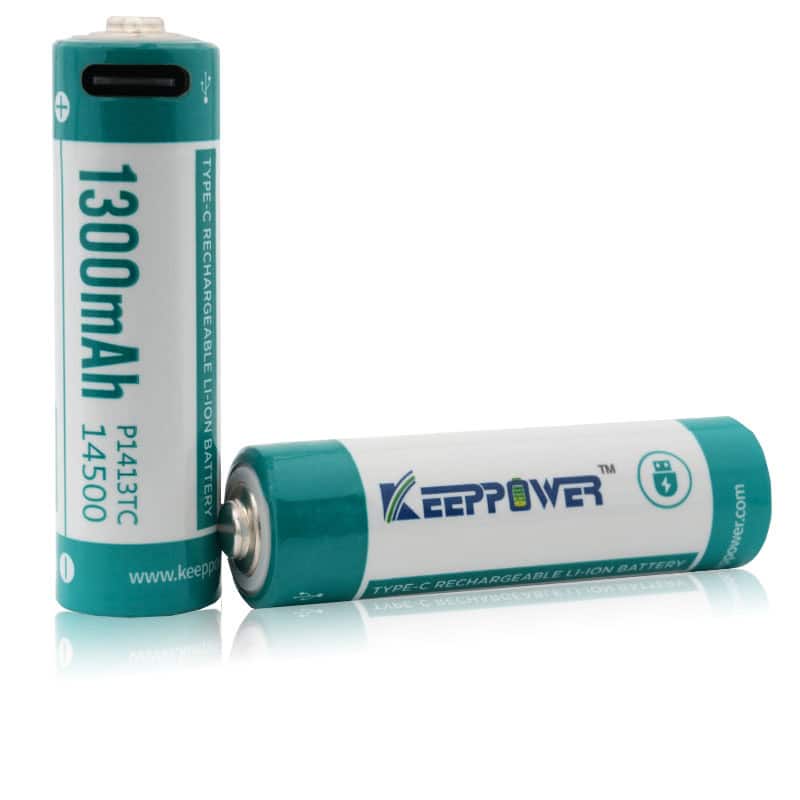
A protected high-discharge battery adds a PCM wrapper that cuts over-charge, 過剰充電, over-current and short circuit, while still allowing high pulses. キープパワー's R-series includes the P1830RC: の 18650 3000 mAh protected cell rated for up to 15 A maximum discharge, per its product page. That is the simplest drop-in solution for high-power flashlights and tools where the device itself has no fuel gauge or protection. の protected high-discharge R-series category そして protected high-discharge battery guide list the full family.
Bare high-discharge cells: maximum current for pack builders
Bare (unprotected) cells leave protection to the pack-level PCM, which lets them run at higher currents. Per Keeppower product page titles, the catalog includes:
– パナソニック NCR18650GA: 3500 mAh, まで 10 A maximum continuous discharge.
– Sony VTC series cells: rated around 30 に 35 あ, per product page titles.
– Samsung 50S (INR21700-50S): around 25 あ, per product page titles.
These bare cells are the building blocks Keeppower uses inside custom packs, where a dedicated PCM guards the whole assembly. For reference, キープパワー's 4S protection board is specified at 10 +/- 5 A over-current cutoff with a short-circuit delay of about 300 microseconds, per its product page.
熱管理と安全性
High discharge heats cells: internal resistance converts current into heat, and heat accelerates aging. Practical pack-design rules apply. Size the pack so the continuous current stays at or below the cell's rating rather than at its peak. Use nickel strips or copper tabs of adequate cross-section to avoid hot spots. Leave ventilation around the cells. And trust the PCM's over-current and short-circuit cutoffs rather than hoping the device will stop at the right moment. Keeppower also offers temperature-protected protected-battery series for environments where overheating risk is the limiting factor.
How to Size a High-Discharge Pack
Three numbers decide the design: the device's continuous current draw, its peak pulse (usually 5 に 10 秒), and the energy needed between charges. Add cells in parallel to share current; a 2P pair of 15 A-rated cells delivers roughly 30 A combined. Keep the string voltage within the device's tolerance window, and specify a connector suited to the current. Keeppower stocks Amass XT60 and XT90-class connectors for drones, EVs and power tools per product pages, so the pack termination matches real high-current use.
Also account for duty cycle and aging margin. A tool that pulls 20 A for ten seconds and rests for twenty seconds is gentle compared with a drone motor that pulls 20 A continuously for minutes. Choose the cell rating against the continuous duty, not the peak, and leave a 20 に 30 percent margin: cells lose current capability as they cycle, so a pack that starts with 10 A of headroom becomes marginal after a year of use.
キープパワー's High-Discharge Lineup
Browse the high-discharge cells category, filtered by <=3C, 3C to 8C そして >=8C tiers, or the protected high-discharge R-series for drop-in cells. For assembled products, の 高放電バッテリーカテゴリー collects ready-to-use options. For custom packs, Keeppower designs 18650 そして 21700 assemblies for drones, e-foils, tools and lights with your connector and private label.
よくある質問
What does C-rate mean for a lithium battery?
C-rate is discharge current divided by capacity: 1C drains the cell in one hour, and 10C in six minutes. On a 3000 mAh cell, 10C equals 30 A continuous. Choosing by C-rate ensures the cell can deliver the device's current without voltage sag or overheating.
What is the difference between a protected and a bare high-discharge cell?
A protected cell wraps a PCM that cuts over-charge, 過剰充電, over-current and short circuit. The Keeppower P1830RC is an 18650 3000 mAh protected cell rated up to 15 あ. A bare cell, such as the Panasonic NCR18650GA at 10 A or Sony VTC-class cells at 30 に 35 あ, relies on pack-level protection and allows higher currents in custom designs.
Which cells are best for FPV drones?
の >=8C tier: cells such as the Sony VTC class (30 に 35 A per product page titles), built into packs like Keeppower's 6S1P 21700 FPV pack with Amass XT60H connector. Continuous current must match motor load with healthy margin.
How many amps can a high-discharge 18650 deliver?
It depends on the model. The Panasonic NCR18650GA is rated up to 10 あ, the Keeppower P1830RC protected cell up to 15 あ, and Sony VTC-class cells around 30 に 35 あ, all per Keeppower product pages.
Is it safe to run a battery at its maximum discharge rate?
Briefly, for short pulses, はい. Continuously, design for below the rating. Heat is the main aging driver, so size the pack with parallel cells to share current and rely on the PCM's over-current and short-circuit protection.
Can Keeppower build a custom high-discharge pack?
はい. Send the required voltage, 容量, 連続電流とピーク電流, 寸法, connector and appearance details. キープパワー's five-step custom process runs from requirement intake, to proposal, sample approval and mass production, with private label available.