目次
- 導入
- How the Two Chemistries Work
- LiFePO4: ある 3.2 V platform built on the olivine structure
- NMC lithium-ion: ある 3.6 に 3.7 V platform built on layered oxides
- LiFePO4 vs NMC at a Glance
- What Makes LiFePO4 a Robust Choice
- Long cycle life and no memory effect
- Wide temperature operation
- Thermal stability and safety
- A real pack example: 4S6P A123, 13.2 V, 15 ああ
- Where NMC Li-Ion Still Wins
- Higher energy density and lighter packs
- The protection-circuit compromise
- How to Choose: Application-Based Guidance
- エネルギー貯蔵, backup power and commercial vehicles
- Portable, weight-sensitive and high-drain devices
- キープパワー's LiFePO4 Product Line
- よくある質問
- What is the main difference between LiFePO4 and NMC lithium-ion?
- Is LiFePO4 safer than NMC?
- Can I replace a 12 V lead-acid battery with LiFePO4?
- Why would I still choose NMC for a portable device?
- Does LiFePO4 have a memory effect?
- How do I specify a custom LiFePO4 pack?
Contents
導入

Choosing the right battery chemistry is one of the first decisions in any OEM power project. The chemistry sets the nominal voltage, the energy density, the service life, the safety behavior and the long-term cost of the system. Two families dominate industrial cylindrical lithium power today: リン酸鉄リチウム (LiFePO4, also called LFP) and nickel-manganese-cobalt (NMC) リチウムイオン. This guide compares the two side by side and explains how to match the chemistry to the application.
For manufacturers specifying packs for energy storage, バックアップ電源, commercial vehicles, portable tools or consumer electronics, the choice is not academic. It decides how many cells the pack needs, how the pack survives a decade of cycling, how it behaves under abuse, and what the product will weigh on day one. Keeppower designs and builds both chemistries in its Dongguan, China factory, and supports OEM, private-label and custom battery pack programs. For background on the manufacturer itself, see the about page.
How the Two Chemistries Work
LiFePO4: ある 3.2 V platform built on the olivine structure
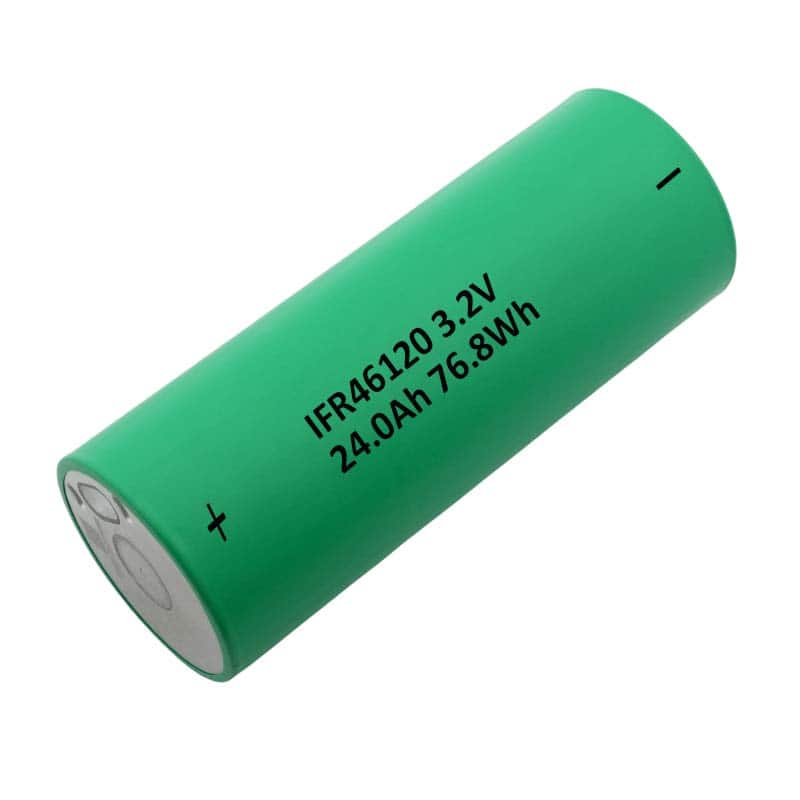
LiFePO4 uses an iron-phosphate olivine cathode. Its nominal cell voltage is about 3.2 V, so a 4S pack delivers a 12.8 V-class platform that competes directly with lead-acid batteries. The strong phosphate bond in the olivine lattice gives the chemistry intrinsic thermal stability: oxygen is released only at very high temperatures, which is why LiFePO4 tolerates overcharge, short circuit and mechanical abuse far better than oxide cathodes. There is no memory effect, and deep, repeated cycling is the chemistry's natural operating mode.
NMC lithium-ion: ある 3.6 に 3.7 V platform built on layered oxides
NMC cathodes combine nickel, manganese and cobalt in a layered oxide structure. Nominal voltage is 3.6 V または 3.7 V per cell, と 4.2 V full-charge point. NMC packs more energy into each cell, which is why it is the chemistry of choice for slim power tools, ドローン, power banks and wearable devices. The trade-off is lower cycle life and less intrinsic thermal stability, which is why NMC packs depend on protection circuits and careful thermal design. For a broader look at this comparison, キープパワー's own LiFePO4 vs Li-ion blog walks through the same trade-offs from an engineering angle.
LiFePO4 vs NMC at a Glance
The table below summarizes the typical industrial-grade values. Exact numbers vary by cell model and pack configuration; ratings quoted here follow Keeppower product pages.
| Property | LiFePO4 (LFP) | NMC lithium-ion |
|---|---|---|
| 公称セル電圧 | 3.2 V | 3.6 に 3.7 V |
| Typical pack platform | 12.8 V (4s), lead-acid replacement | 14.4 V / 14.8 V (4s) |
| エネルギー密度 | より低い; larger and heavier packs | より高い; lighter, slimmer packs |
| サイクル寿命 | >1000 サイクル (per Keeppower product pages) | >500 cycles typical for protected cells |
| 動作温度 | -30 に +55 C (per Keeppower A123 pack) | 充電 +10 に +45 C; 放電 -20 に +60 C |
| Thermal stability and safety | 高い; strong phosphate bond | 適度; requires protection circuit |
| Memory effect | None | 最小限 |
| Upfront cell cost | Higher per cell | Lower per cell |
| Best-fit applications | ストレージ, バックアップ電源, commercial vehicles | Portable, weight-sensitive, high-drain devices |
注記: Values are typical industrial-grade figures per Keeppower product pages; confirm the specific datasheet for any cell model before design-in.
What Makes LiFePO4 a Robust Choice
Long cycle life and no memory effect
LiFePO4 is designed for deep, repeated cycling. キープパワー's A123-based pack is rated for more than 1000 充放電サイクル, and the chemistry has no memory effect, so users can top up the battery at any state of charge without gradual capacity loss. That makes LiFePO4 the default chemistry where the asset's value lies in long service life rather than light weight: solar storage cabinets, telecom backup, buffer stations and commercial-vehicle batteries. の LiFePO4 battery pack OEM selection guide goes deeper into sizing these systems.
Wide temperature operation
The same A123-based pack operates from -30 C to +55 C and can be stored from -40 C to +60 C, per Keeppower product pages. For outdoor installations, telecom backup sites, cold-climate vehicles and industrial equipment, that temperature envelope removes the elaborate thermal management that NMC packs would otherwise require to stay safe.
Thermal stability and safety
Because the olivine lattice holds oxygen tightly, LiFePO4 cells are much less prone to thermal runaway under overcharge, short circuit or puncture. This is why LiFePO4 is preferred in spaces where people are present and where a fire event is unacceptable: commercial-vehicle battery compartments, stationary power cabinets and public infrastructure. Protection circuitry is still included, but the chemistry itself provides a much larger safety margin.
A real pack example: 4S6P A123, 13.2 V, 15 ああ
キープパワー's 4S6P A123 LiFePO4 pack assembles 24 LithiumWerks/A123 ANR26650M1B cells (26650 フォームファクター) with a full PCB protection circuit into a 13.2 V, 15 ああ (最小 14.4 ああ) unit weighing about 1.85 kg. Per Keeppower product pages, it is rated for more than 1000 cycles and spans -30 に +55 C operation. Keeppower lists its applications as portable high-power equipment, fixed backup power, grid stabilization storage and commercial/bus hybrid systems.
Where NMC Li-Ion Still Wins
Higher energy density and lighter packs
When space and weight are the limiting factors, NMC delivers. A high-capacity 18650 のような パナソニック NCR18650GA stores 3500 mAh in a compact cell and supports up to 10 A maximum continuous discharge, per Keeppower product pages. That combination of capacity and current is what makes slim flashlights, power-bank cells, drone packs and medical devices possible. Keeppower stocks high-capacity cells across 18650, 21700 そして 26650 form factors in the high-capacity cell category.
The protection-circuit compromise
NMC needs protection. A PCM cuts over-charge at about 4.2 V per cell, over-discharge near 2.5 V, over-current and short circuit. キープパワー's protected cells integrate a Japanese-made safety IC and are rated for more than 500 サイクル. The result is predictable, safe power for everyday portable gear, but not the multi-thousand-cycle durability of LiFePO4. If your product lives on a charger or cycles daily, the chemistry decision usually favors LFP.
How to Choose: Application-Based Guidance
エネルギー貯蔵, backup power and commercial vehicles
Choose LiFePO4 where cycles per day are high, downtime is costly, and weight is secondary to service life: solar energy storage, UPS and telecom backup, bus and hybrid commercial-vehicle packs, and grid buffering. Browse Keeppower's LiFePO4-IFR cells and the complete LiFePO4 battery pack line for platform options.
Portable, weight-sensitive and high-drain devices
Choose NMC where every gram matters: handheld power tools, high-lumen flashlights, FPVドローン, e-foil boards and portable medical devices. キープパワー's custom pack line includes 18650 そして 21700 NMC packs built with your choice of connector and private label. The five-step custom process starts with your requirements and runs through proposal, sample approval and mass production. See how Keeppower works as a カスタムリチウムバッテリーパックメーカー or start the conversation on the contact page.
キープパワー's LiFePO4 Product Line
キープパワーテクノロジー株式会社, LIMITED has supplied industrial lithium batteries since 2008 from its Dongguan factory. It supplies both raw LiFePO4-IFR cells across multiple cylindrical form factors and complete custom LiFePO4 packs. Customization covers capacity, 最大放電電流, 寸法, ワイヤー, コネクタ, packaging and private label. Product documentation per Keeppower pages includes UN38.3, CE, ROHS, IEC62133, UL2054 and Regulation (欧州連合) 2023/1542 compliance for relevant models.
よくある質問
What is the main difference between LiFePO4 and NMC lithium-ion?
LiFePO4 uses a phosphate cathode at 3.2 V per cell and prioritizes cycle life, thermal stability and safety. NMC uses a layered oxide cathode at 3.6 に 3.7 V per cell and prioritizes energy density. Per Keeppower product pages, the A123-based LiFePO4 pack is rated for more than 1000 サイクル, while typical protected NMC cells target more than 500 サイクル.
Is LiFePO4 safer than NMC?
一般的に, はい. The olivine structure of LiFePO4 holds oxygen tightly and resists thermal runaway under abuse. NMC oxide cathodes are less stable and depend on protection circuits and thermal design. Per Keeppower product pages, LiFePO4 packs still include PCB protection, but the chemistry itself provides a larger safety margin.
Can I replace a 12 V lead-acid battery with LiFePO4?
Often, はい. A 4S LiFePO4 pack delivers a 12.8 に 13.2 V platform. キープパワー's 4S6P A123 pack (13.2 V, 15 ああ) is built for exactly this kind of replacement in backup power, commercial-vehicle and stationary storage roles.
Why would I still choose NMC for a portable device?
Because of energy density. NMC cells such as the Panasonic NCR18650GA (3500 mAh, まで 10 A maximum continuous discharge, per Keeppower product pages) fit more power into a smaller, lighter package, which matters in flashlights, 電動工具, drones and medical devices.
Does LiFePO4 have a memory effect?
いいえ. Per Keeppower product pages, LiFePO4 cells have no memory effect and tolerate repeated partial top-ups without losing capacity, which is convenient in everyday use and in solar storage cycling.
How do I specify a custom LiFePO4 pack?
Send the required voltage, 容量, charge and discharge current, 寸法, connector and appearance details through the contact page. キープパワー's standard five-step custom process runs from requirement intake, to proposal, price and quantity confirmation, sample approval, and finally mass production.