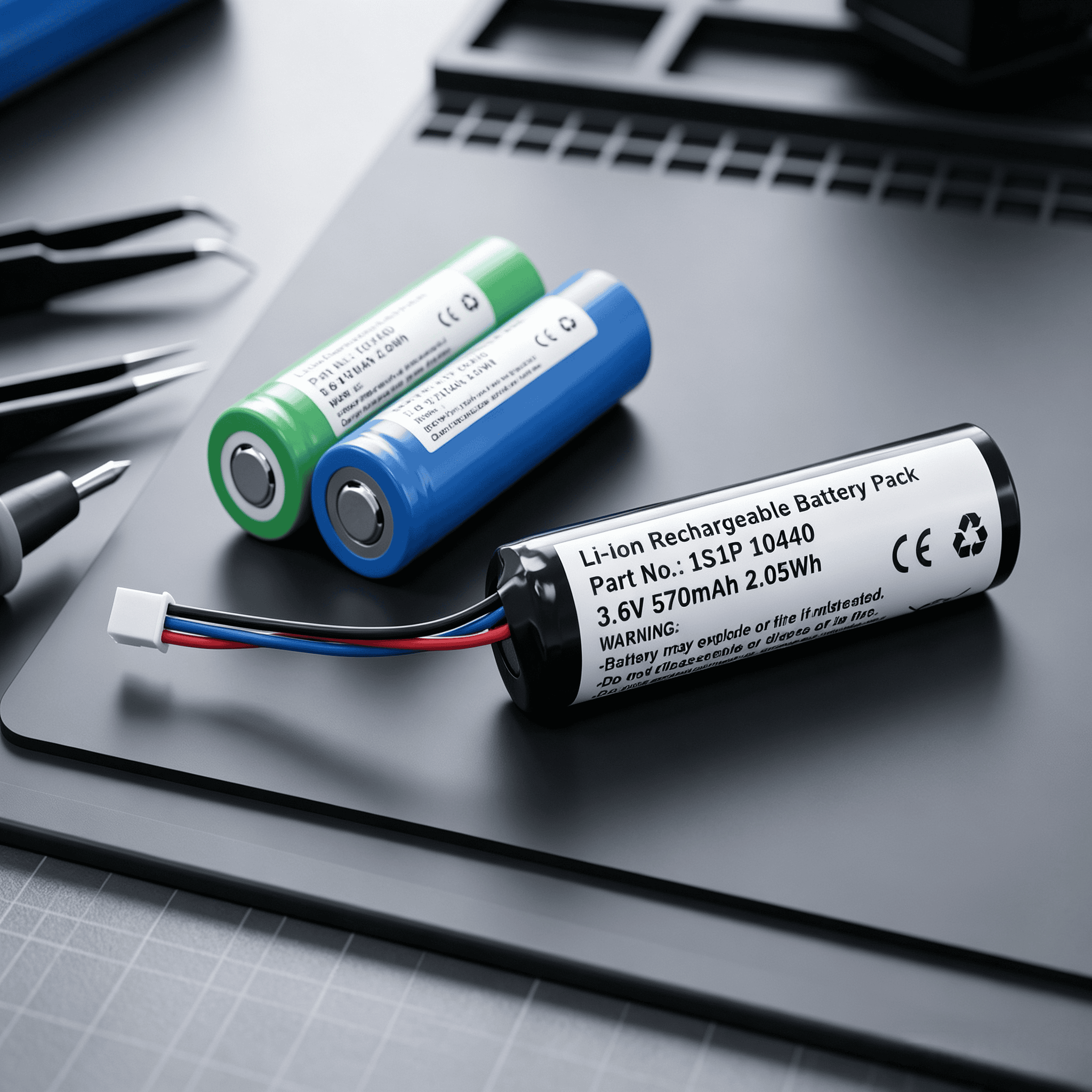
Selecting a medical device battery pack requires more than matching voltage and capacity. The pack supports a defined clinical or diagnostic function, so battery behavior must be considered in the equipment’s risk management, сигналы тревоги, зарядка, maintenance, cleaning, хранилище, and expected service life. The device manufacturer remains responsible for defining applicable standards, regulatory pathways, and validation evidence for the final product.
A clear OEM specification begins with the use environment and consequence of power loss. A portable monitor, infusion-related accessory, imaging subsystem, home-care device, and laboratory instrument can have very different needs for runtime, redundancy, state-of-charge accuracy, hot swapping, and backup behavior.

Translate clinical use into engineering requirements
Define the full device voltage window and current profile, including startup, pumps, heaters, radios, displays, сигналы тревоги, and processor peaks. Determine how the device behaves at low state of charge and whether it must complete a procedure, preserve data, or transition to another supply. Runtime requirements should include reserve and end-of-life capacity.
Protection and monitoring may include cell-group voltage, pack current, multiple temperature points, балансировка, short-circuit and overcurrent response, charge control, state-of-charge estimation, cycle logging, and authenticated communication. The architecture should align with the equipment hazard analysis rather than rely on a generic BMS checklist.
Характеристики, важные для реального устройства
Document chemistry, cell manufacturer and model, configuration, nominal and maximum voltage, минимальная мощность, energy, continuous and peak current, charge method, temperature ranges, enclosure materials, размеры, mass, разъем, кабель, communication protocol, expected cycle and calendar life, хранилище, transport, and traceability.
Cleaning agents, sterilization approach, ingress, drop, вибрация, electromagnetic environment, and user access can affect pack design. Many batteries are not intended to be sterilized directly, so the equipment’s barrier and service procedure must be defined. Labeling and replacement instructions should prevent incompatible packs from being installed.
| OEM question | Battery implication | Evidence |
|---|---|---|
| What happens on power loss? | Reserve, сигналы тревоги, redundancy | Risk analysis and device test |
| Who replaces the pack? | Разъем, enclosure, keying | Usability and service validation |
| Where is it used? | Температура, ingress, cleaning | Environmental qualification |
| How is it tracked? | Lot and lifecycle records | Traceability system |

Как сделать правильный выбор
Engage the battery supplier early enough to influence enclosure, разъем, зарядное устройство, and thermal design. A late request for a pack that must fit a fixed cavity can force compromises. Provide drawings, electrical waveforms, use cases, and risk controls rather than a short request for voltage and mAh.
Plan for component change control and supply continuity. Cell models and electronic components evolve, and a substitute may require engineering assessment and revalidation. Define notification, approval, traceability, and documentation expectations in the supplier relationship.
Распространенные ошибки, которых следует избегать
Do not size runtime from a new cell at room temperature without accounting for aging, cold or hot conditions, conversion loss, and reserve. Do not assume a fuel-gauge percentage is accurate without calibration across the intended load and life profile.
Avoid unkeyed connectors or mechanically compatible packs with incompatible voltage or firmware. Do not overlook shipping and service state of charge, spare-battery storage, damaged-pack handling, and end-of-life replacement instructions.
Рекомендации по применению и OEM
Portable diagnostic equipment may prioritize energy density and accurate state reporting. Home-use devices require clear user interaction and safe replacement. Clinical carts may need rapid charging and frequent cycling. Laboratory instruments may need long calendar life and traceable scheduled maintenance.
Verification should include normal operation and foreseeable misuse, charger faults, blocked ventilation, connector cycling, battery depletion, alarm behavior, hot and cold operation, transport, хранилище, and aged packs. Testing must be planned by the medical-device manufacturer within its applicable quality and regulatory framework.

Рабочий пример
A portable device must operate for eight hours and provide a 30-minute low-battery reserve. The engineering team measures power across display brightness, wireless transmission, сигналы тревоги, and worst-case processing. It then applies conversion loss and end-of-life capacity assumptions before setting minimum pack energy. The low-battery threshold is validated with aged representative packs, not only new samples.
Безопасность, проверка, и закупочная дисциплина
Выбор батареи никогда не должен основываться только на наибольшем значении емкости.. Подтвердите разрешенный изготовителем устройства химический состав., номинальное напряжение, максимальное напряжение заряда, полярность, терминальный стиль, физическая оболочка, требования к непрерывному и пиковому току. Ячейка, которая подходит механически, все же может быть электрически неправильной.. For medical device battery packs, Самый безопасный подход — рассматривать руководство по оборудованию и паспорт батареи как согласованную пару, а не предполагать, что два элемента с одинаковыми названиями являются взаимозаменяемыми..
Купите у отслеживаемого поставщика и просмотрите текущую спецификацию., детали защиты, тестовая документация, и транспортную информацию для конкретной модели. Держите клетки подальше от незакрепленных металлических предметов., вода, сокрушительный, прокол, чрезмерная жара, и несанкционированная модификация. Прекратите использовать батарею, которая становится необычно горячей., вздутый, помятый, разъеденный, утечка, или механически повреждены. Используйте совместимое зарядное устройство и никогда не превышайте указанный ток или напряжение заряда.. Эти методы обеспечивают надежную работу, но не заменяют инструкции, прилагаемые к устройству., зарядное устройство, или аккумулятор.
Практический процесс выбора
- Начни с нагрузки. Запись номинального напряжения, рабочий ток, пиковый ток, цель времени выполнения, и рабочий цикл.
- Проверьте отсек. Измерьте полезный диаметр, длина, зазор разъема, тип терминала, и сжатие пружины.
- Выберите архитектуру безопасности. Решите, ожидает ли приложение защищенную ячейку, незащищенная ячейка, управляемая хостом, или полный пакет с BMS или PCM.
- Матчевая зарядка. Проверка химии, максимальное напряжение заряда, зарядный ток, метод завершения, и температурные пределы.
- Проверьте реальную систему. Прежде чем утверждать производство, протестируйте типичные батареи в конечном устройстве в ожидаемом диапазоне температур и нагрузок..
Этот рабочий процесс особенно важен для OEM-программ.. Поведение батареи зависит от взаимодействия химического состава клеток., защитная электроника, механическая упаковка, прошивка, зарядка, и пользовательская среда. Ранняя проверка обходится дешевле, чем перепроектирование аккумуляторного отсека или силового каскада после завершения оснастки..
Часто задаваемые вопросы
What information should an OEM give a battery supplier?
Voltage window, профиль нагрузки, runtime and reserve, размеры, разъем, зарядка, температура, communication, life, environment, and compliance expectations.
Is capacity the main medical battery requirement?
Нет. Reliability, monitoring, сигналы тревоги, traceability, защита, service strategy, and validation are equally important.
Can a commercial battery pack be used directly?
Only after the device manufacturer confirms electrical, mechanical, безопасность, regulatory, and lifecycle suitability for the intended equipment.
How should cell changes be managed?
Through documented notification, engineering assessment, traceability, risk review, and any required revalidation.
Связанные ресурсы Keeppower
- Индивидуальные аккумуляторные блоки
- Защищено 18650 батарейки
- Защищено 21700 батарейки
- Низкотемпературные батареи
- Temperature-protection series
- Зарядные устройства и пауэрбанки
- О Кипповер
- Связаться с Keeppower
Заключение
A medical device battery pack is part of the equipment’s safety and lifecycle strategy. Convert clinical use into measurable electrical, mechanical, environmental, monitoring, traceability, and service requirements. Involve the battery partner early, manage changes formally, and validate representative aged packs in the final device under the manufacturer’s quality and regulatory process.
Нужна помощь в подборе аккумулятора к устройству или в разработке OEM-решения.? Связаться с Keeppower с напряжением, текущий, время выполнения, размеры, разъем, метод зарядки, и экологические требования вашего проекта.