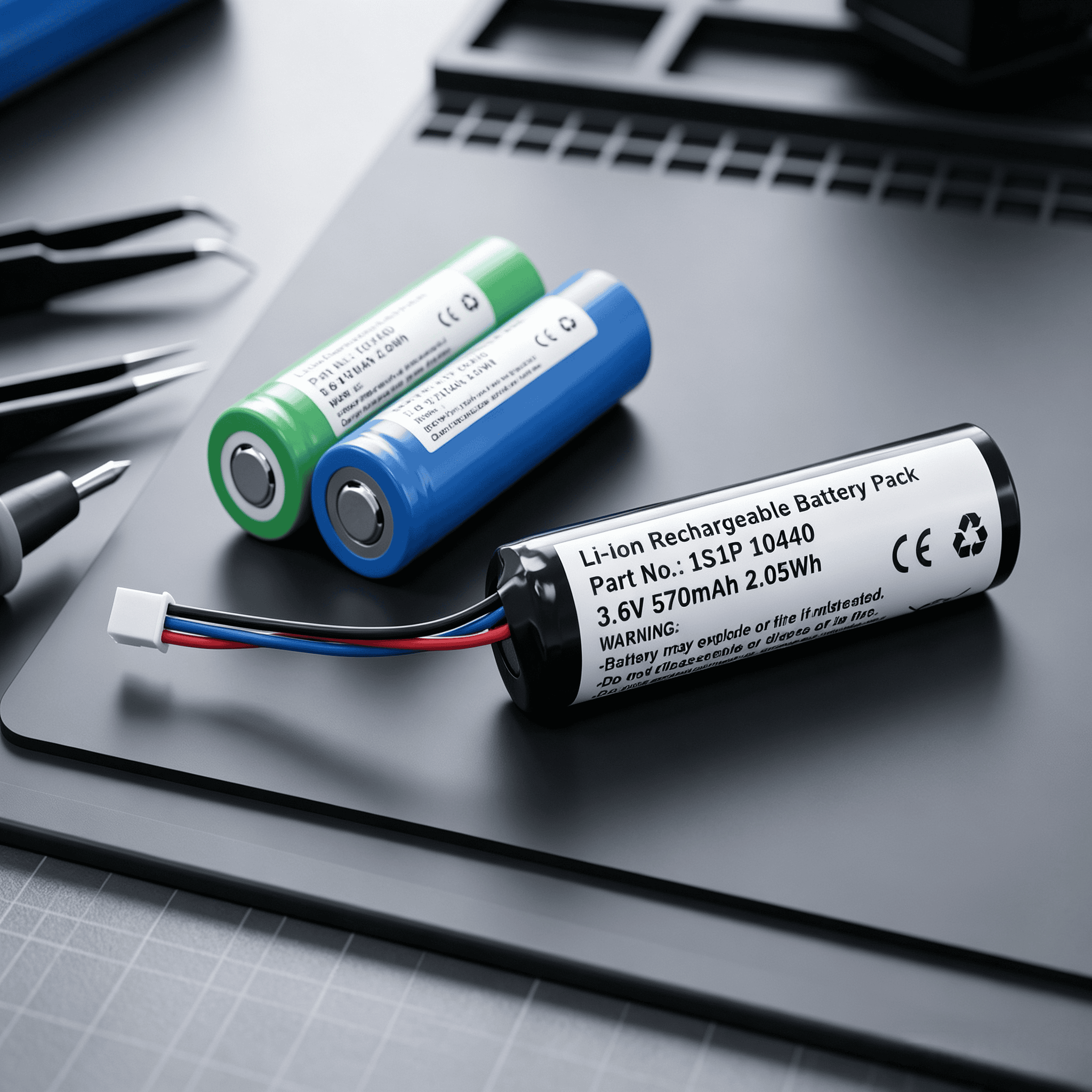
Selecting a medical device battery pack requires more than matching voltage and capacity. The pack supports a defined clinical or diagnostic function, so battery behavior must be considered in the equipment’s risk management, 警报, 收费, maintenance, cleaning, 贮存, and expected service life. The device manufacturer remains responsible for defining applicable standards, regulatory pathways, and validation evidence for the final product.
A clear OEM specification begins with the use environment and consequence of power loss. A portable monitor, infusion-related accessory, imaging subsystem, home-care device, and laboratory instrument can have very different needs for runtime, redundancy, state-of-charge accuracy, hot swapping, and backup behavior.

Translate clinical use into engineering requirements
Define the full device voltage window and current profile, including startup, pumps, heaters, 收音机, displays, 警报, and processor peaks. Determine how the device behaves at low state of charge and whether it must complete a procedure, preserve data, or transition to another supply. Runtime requirements should include reserve and end-of-life capacity.
Protection and monitoring may include cell-group voltage, pack current, multiple temperature points, 平衡, short-circuit and overcurrent response, charge control, state-of-charge estimation, cycle logging, and authenticated communication. The architecture should align with the equipment hazard analysis rather than rely on a generic BMS checklist.
实际设备中重要的规格
Document chemistry, cell manufacturer and model, 配置, nominal and maximum voltage, 最小容量, 活力, 连续电流和峰值电流, charge method, temperature ranges, enclosure materials, 方面, 大量的, 连接器, cable, communication protocol, expected cycle and calendar life, 贮存, transport, and traceability.
Cleaning agents, sterilization approach, ingress, drop, 振动, electromagnetic environment, and user access can affect pack design. Many batteries are not intended to be sterilized directly, so the equipment’s barrier and service procedure must be defined. Labeling and replacement instructions should prevent incompatible packs from being installed.
| OEM question | Battery implication | Evidence |
|---|---|---|
| What happens on power loss? | Reserve, 警报, redundancy | Risk analysis and device test |
| Who replaces the pack? | 连接器, 外壳, keying | Usability and service validation |
| Where is it used? | 温度, ingress, cleaning | Environmental qualification |
| How is it tracked? | Lot and lifecycle records | Traceability system |

如何做出正确的选择
Engage the battery supplier early enough to influence enclosure, 连接器, 充电器, and thermal design. A late request for a pack that must fit a fixed cavity can force compromises. Provide drawings, electrical waveforms, use cases, and risk controls rather than a short request for voltage and mAh.
Plan for component change control and supply continuity. Cell models and electronic components evolve, and a substitute may require engineering assessment and revalidation. Define notification, approval, traceability, and documentation expectations in the supplier relationship.
要避免的常见错误
Do not size runtime from a new cell at room temperature without accounting for aging, cold or hot conditions, conversion loss, and reserve. Do not assume a fuel-gauge percentage is accurate without calibration across the intended load and life profile.
Avoid unkeyed connectors or mechanically compatible packs with incompatible voltage or firmware. Do not overlook shipping and service state of charge, spare-battery storage, damaged-pack handling, and end-of-life replacement instructions.
应用和 OEM 考虑因素
Portable diagnostic equipment may prioritize energy density and accurate state reporting. Home-use devices require clear user interaction and safe replacement. Clinical carts may need rapid charging and frequent cycling. Laboratory instruments may need long calendar life and traceable scheduled maintenance.
Verification should include normal operation and foreseeable misuse, charger faults, blocked ventilation, connector cycling, battery depletion, alarm behavior, hot and cold operation, transport, 贮存, and aged packs. Testing must be planned by the medical-device manufacturer within its applicable quality and regulatory framework.

工作示例
A portable device must operate for eight hours and provide a 30-minute low-battery reserve. The engineering team measures power across display brightness, wireless transmission, 警报, and worst-case processing. It then applies conversion loss and end-of-life capacity assumptions before setting minimum pack energy. The low-battery threshold is validated with aged representative packs, not only new samples.
安全, 确认, 和采购纪律
电池选型决不能仅根据最大容量数. 确认设备制造商允许的化学物质, 标称电压, 最大充电电压, 极性, 终端风格, 物理信封, 以及连续电流和峰值电流要求. 机械配合的电池仍然可能出现电气错误. For medical device battery packs, 最安全的方法是将设备手册和电池数据表视为配对,而不是假设两个具有相似名称的电池可以互换.
从可追溯的供应商处购买并查看当前规格表, 保护细节, 测试文档, 以及确切型号的运输信息. 让细胞远离松动的金属物体, 水, 压碎, 穿刺, 过热, 和未经授权的修改. 停止使用异常发热的电池, 肿, 凹陷的, 腐蚀的, 泄漏, 或机械损坏. 使用兼容的充电器,切勿超过规定的充电电流或电压. 这些做法支持可靠的操作,但不能取代设备随附的说明, 充电器, 或电池.
实用的选择工作流程
- 从负载开始. 记录标称电压, 工作电流, 峰值电流, 运行时目标, 和占空比.
- 检查车厢. 测量可用直径, 长度, 连接器间隙, 终端类型, 和弹簧压缩.
- 选择安全架构. 确定应用程序是否需要受保护的单元, 由主机管理的未受保护的单元, 或带有 BMS 或 PCM 的完整套件.
- 匹配充电. 验证化学成分, 最大充电电压, 充电电流, 终止方法, 和温度限制.
- 验证真实系统. 在批准生产之前,在预期温度和负载范围内测试最终设备中的代表性电池.
此工作流程对于 OEM 计划尤其重要. 电池行为取决于电池化学之间的相互作用, 保护电子设备, 机械包装, 固件, 收费, 和用户环境. 早期验证比工具完成后重新设计电池盒或功率级更便宜.
常见问题
What information should an OEM give a battery supplier?
电压窗口, load profile, runtime and reserve, 方面, 连接器, 收费, 温度, communication, life, environment, and compliance expectations.
Is capacity the main medical battery requirement?
不. Reliability, monitoring, 警报, traceability, 保护, 服务策略, and validation are equally important.
Can a commercial battery pack be used directly?
Only after the device manufacturer confirms electrical, mechanical, 安全, regulatory, and lifecycle suitability for the intended equipment.
How should cell changes be managed?
Through documented notification, engineering assessment, traceability, risk review, and any required revalidation.
相关 Keeppower 资源
结论
A medical device battery pack is part of the equipment’s safety and lifecycle strategy. Convert clinical use into measurable electrical, mechanical, environmental, monitoring, traceability, and service requirements. Involve the battery partner early, manage changes formally, and validate representative aged packs in the final device under the manufacturer’s quality and regulatory process.
需要帮助将电池与设备匹配或开发 OEM 解决方案? 联系Keeppower 随着电压, 当前的, 运行时, 方面, 连接器, 充电方式, 以及您项目的环境要求.