Table of Contents
- Why Underwater Power Systems Demand a Specialized Pack
- Choosing the Right Cell for ROV, AUV and Sonar Packs
- Energy Density vs Discharge Capability
- Temperature and Sealing Considerations
- Pack Architecture: Series, Parallel and Protection
- Connectors, Wiring and Mechanical Design
- Testing and Certification for Subsea Batteries
- A Real-World Pack Build Example
- FAQ
- Can a standard consumer battery be used in an ROV?
- How deep can a lithium underwater battery pack go?
- What is the expected cycle life of an underwater pack?
Why Underwater Power Systems Demand a Specialized Pack
Remotely operated vehicles (ROVs), autonomous underwater vehicles (AUVs), side-scan sonar units, underwater cameras and fish-finding sonar systems all place unusual demands on their power source. The pack must deliver steady current through long missions, survive vibration and impact, resist moisture and pressure, and remain dependable enough that a vehicle does not fail mid-dive. A consumer-grade protected cell used in a flashlight is not engineered for this environment, and choosing the wrong power source is one of the most common causes of field failures in subsea equipment.
This guide explains how a rugged underwater ROV battery pack is designed, from cell selection and pack architecture to sealing, connectors, testing and certification. It is written for engineers, product managers and OEM buyers who are specifying power for marine robotics, and it complements our broader overview of customized battery packs for demanding applications.
Keeppower has built custom lithium packs for sonar detectors, ROVs, AUVs and underwater robots, along with packs for drones, eFoils, medical devices and smart locks. Every subsea pack is assembled around qualified cells, a protection circuit matched to the load, and a mechanical build that protects the cells from shock, water and pressure. If you are evaluating a supplier for an underwater project, review our OEM custom battery pack guide first to understand the typical order and qualification process.

Choosing the Right Cell for ROV, AUV and Sonar Packs
The cell is the foundation of any reliable underwater pack. Underwater applications rarely need the extreme pulse current of a racing drone, but they do require consistent capacity over many cycles, stable voltage under load, and predictable behavior at the temperature swings that occur between surface and depth. Cell chemistry, capacity and discharge rating should be matched to the mission profile rather than chosen by name alone.
Energy Density vs Discharge Capability
Two cell traits dominate the selection decision. Energy density determines how long the vehicle can run on a given weight and volume, while discharge capability (often expressed as a continuous current or C-rate) determines how safely the cell can supply peak loads such as thruster startup, sonar transmission or camera recording. A high-capacity cell that cannot sustain the required current will sag under load and run hot; a high-drain cell with low capacity will weigh more than necessary for a long mission. The right balance depends on whether your system is power-limited, weight-limited or size-limited.
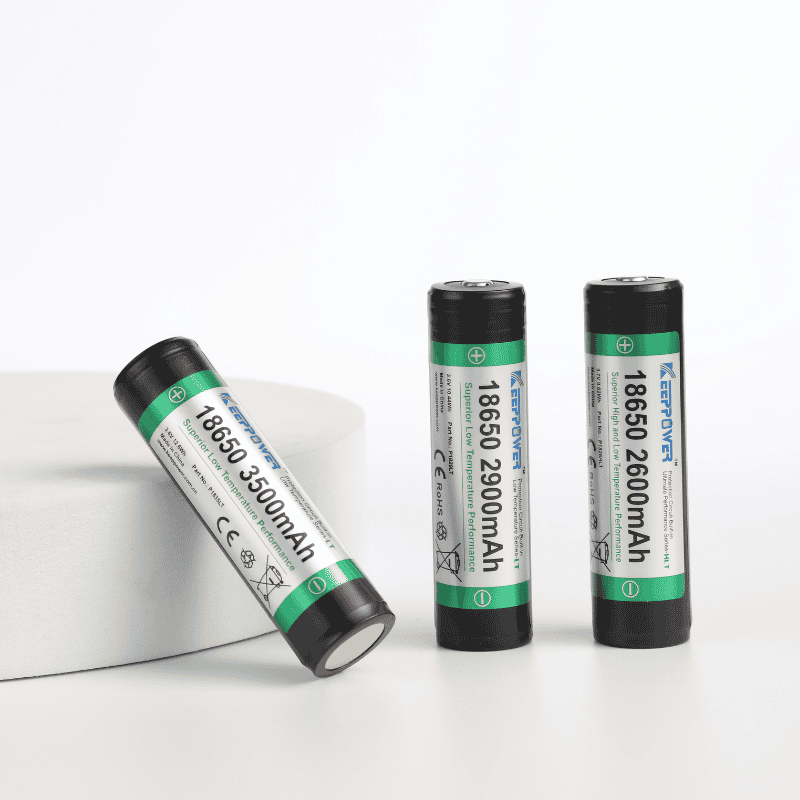
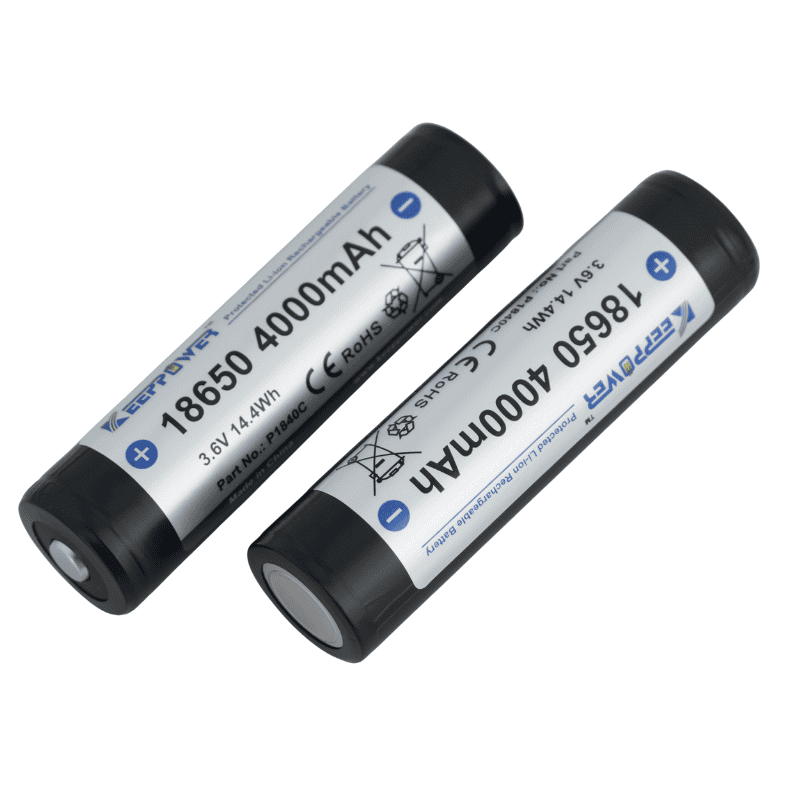
For reference, Keeppower stocks protected cylindrical cells in the 18650 and 21700 form factors, along with high-capacity cells and high-discharge cells suited to different load profiles. In a subsea pack, cells are matched for capacity and internal resistance before assembly so that no single cell becomes a weak point under load.
Temperature and Sealing Considerations
Water conducts heat away quickly, and deep water can be cold year-round. Cells pushed hard in cold conditions lose usable capacity and can suffer shortened life if discharged at too high a rate. For vehicles that operate in near-freezing or high-altitude-cold environments, a low-temperature battery formulation may be more appropriate than a standard cell. Our cold-weather guide covers the voltage and capacity trade-offs in detail in the low-temperature lithium battery article.
Sealing is the second half of the environmental equation. Even the best cell chemistry will fail if moisture reaches the terminals, so the enclosure must exclude water at the rated depth, and every cable exit, connector and vent must be sealed consistently. Pressure relief, cable strain relief and corrosion-resistant contacts are part of the pack design, not add-ons.
Pack Architecture: Series, Parallel and Protection
Underwater vehicles usually need a pack voltage higher than a single cell provides, so cells are combined in series to reach the target nominal voltage, and in parallel where additional capacity is required. Series strings multiply voltage; parallel groups multiply capacity. The ratio of series to parallel cells determines both the pack voltage and its total energy storage, and it must be derived from the motor or electronics specification before cells are even chosen.
The PCM protection board monitors each cell (or each group) and cuts the discharge or charge path when overcharge, over-discharge, over-current or short-circuit thresholds are reached. In subsea use, protection is especially important because an unrecoverable pack failure means a lost vehicle. Our series/parallel and PCM design guide explains how protection thresholds are sized, while the PCM vs BMS comparison clarifies when a simple protection board is enough and when a fuller battery management system is required.
| Design Factor | What It Determines | Typical Review Point |
|---|---|---|
| Cell chemistry | Energy density, voltage curve, cycle life and safety margin | Match to mission runtime and operating temperature |
| Series count (S) | Pack nominal voltage and cutoff voltage | Align with the motor/controller maximum input |
| Parallel count (P) | Total capacity and sustained current sharing | Size to runtime and peak thrust requirement |
| Protection board | Overcharge, over-discharge, over-current and short-circuit cutoffs | Set thresholds below cell and device limits |
| Enclosure and seal | Water, pressure, shock and vibration resistance | Verify to the rated depth and deployment conditions |

Connectors, Wiring and Mechanical Design
In an underwater pack, the connector and wiring harness carry the full mission current, and they are often the first components to fail if undersized. Power connectors such as the Amass XT series and JST signal connectors are selected by current rating, contact resistance and polarization, and the harness is built so that strain relief protects the solder joints and crimps. The connectors category shows the power and signal formats commonly used in packs; our connector guide compares XT30, XT60, XT90 and JST options by current rating.
Mechanical layout matters as much as electronics. Cells must be held firmly so they do not shift under thrust or impact, spacers and holders keep cell spacing consistent for cooling and safety, and the enclosure must allow service access where the product requires it. Battery spacers and holders, battery cases and nickel tabs are chosen to match the cell count and the enclosure design. Vibration testing, drop testing and a physical inspection of welds and contacts complete the mechanical review before the pack ships.
Testing and Certification for Subsea Batteries
A pack destined for marine robotics should be validated before it reaches the customer. Basic validation includes capacity and runtime checks, charge and discharge cycle testing, internal resistance measurement, and a review of the protection board behavior under fault conditions. For packs that will be shipped internationally, compliance with transport regulations such as UN38.3 is essential; our safety, storage and transport guide outlines what the UN manual test covers and why it matters for shipping lithium cells and packs.
Quality systems and component certification also matter to OEM buyers. Keeppower packs are manufactured under an ISO9001:2015 quality framework, and components are selected where UL, CB, IEC, UN, CCC, ETL, CE and RoHS documentation is available. When evaluating a supplier, ask for the actual test reports and certificates that apply to your pack rather than a general statement of compliance.

A Real-World Pack Build Example
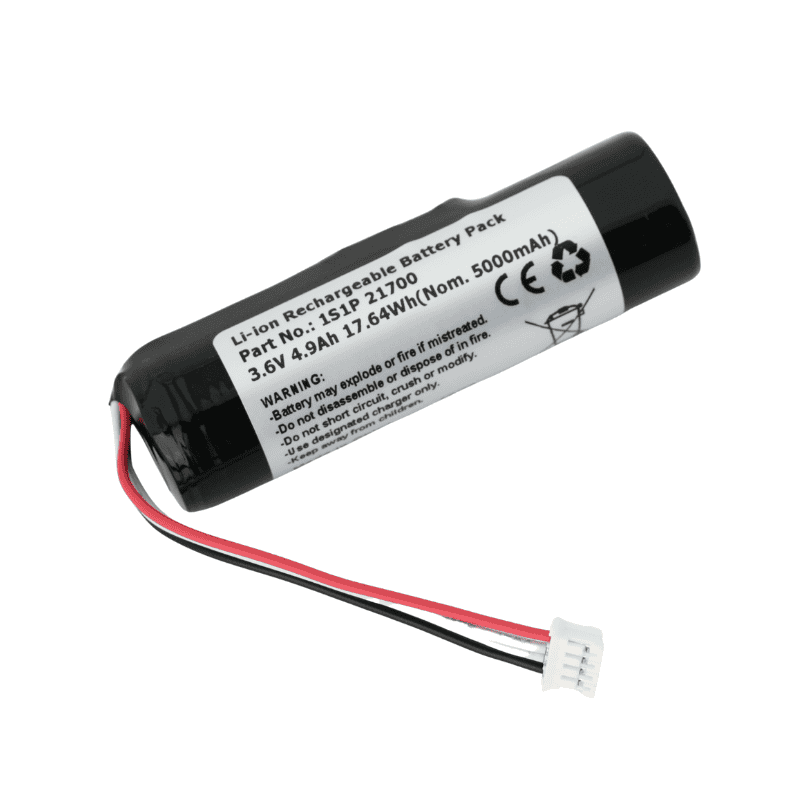
To make the design process concrete, consider a compact inspection ROV that needs a 14.4 V pack with enough capacity for a two-hour mission and enough discharge headroom for thruster surges. The engineer would start from the required voltage to determine the series count, use the target runtime to set capacity and parallel count, then select cells that comfortably cover the continuous and peak current. A protection board matching that series count is chosen, balanced against the pack’s maximum charge and discharge current, and the whole assembly is built into a sealed enclosure with a rated power connector and balanced leads.
The finished pack then goes through capacity verification, load testing and a final inspection before packaging. This is the same workflow used for Keeppower’s FPV drone and UAV packs, hydrofoil batteries and other custom packs, with the environmental sealing scaled to the subsea application. If you are planning a new underwater product, you can discuss your voltage, capacity and connector requirements through the contact page for a custom pack quotation.
FAQ
Can a standard consumer battery be used in an ROV?
Consumer protected cells are designed for lights, electronics and similar low-vibration devices, not for sustained underwater duty. They typically lack the matched-cell consistency, reinforced mechanical build and sealed harness needed for marine use. For any ROV, AUV or sonar product, a purpose-built pack with a rated protection board and sealed enclosure is the safer and longer-lasting choice.
How deep can a lithium underwater battery pack go?
The depth rating is set mainly by the enclosure and sealing design rather than the cells themselves. A pack can be built for shallow inspection ROVs or deeper survey equipment, but the housing, cable glands and connectors must all be rated for the target depth, and the assembly should be pressure-tested before deployment. Always specify your maximum operating depth when requesting a custom pack.
What is the expected cycle life of an underwater pack?
Cycle life depends on chemistry, depth of discharge, charge rate and operating temperature. Li-ion packs used at moderate discharge rates and stored with a partial charge typically deliver several hundred cycles, while conservative charging and thermal care extend service life. Our article on battery cycle life and shelf life explains the factors in more detail.